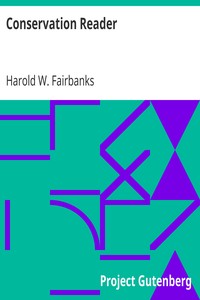
Conservation Reader by Harold W. Fairbanks
Harold Fairbanks' Conservation Reader is exactly what its title suggests: a textbook designed for schoolchildren in the early 20th century. There's no traditional plot with characters. Instead, the 'story' is the unfolding explanation of America's natural wealth—its forests, waterways, soils, and wildlife—and the clear warning that this wealth is being carelessly spent.
The Story
The book walks a young reader through the gifts of nature, chapter by chapter. It explains how forests prevent floods, how soil is built over centuries, and how coal and minerals are formed. Then, it shows the consequences of waste: eroded hillsides, silted-up rivers, and animals pushed toward extinction. The narrative is one of cause and effect, urging a new generation to see themselves not as conquerors of nature, but as its stewards. It’s a direct plea, wrapped in simple science lessons, for a fundamental shift in thinking.
Why You Should Read It
This is where the book gets really interesting for a modern reader. It's a snapshot of a pivotal moment. The conservation ideas we take for granted today were still being introduced to the public. Reading Fairbanks’ earnest, sometimes almost desperate explanations feels like listening to the first few notes of a song that would become a symphony. His voice is patient but firm, treating conservation as plain common sense. You can feel his hope that if kids just understood how nature worked, they’d make better choices than their parents did. It’s humbling and surprisingly moving.
Final Verdict
This isn't a book for someone seeking a thrilling narrative. It's for the curious reader, the history lover, or anyone interested in environmentalism's foundations. It’s perfect for understanding the early arguments that shaped our national parks and environmental policies. Think of it as a primary source—a conversation with the past that makes you reflect sharply on the present. If you've ever wondered how the conservation movement started talking to everyday people, especially kids, this is a clear and compelling place to begin.
The copyright for this book has expired, making it public property. Feel free to use it for personal or commercial purposes.
Michael Garcia
11 months agoLooking at the bibliography alone, the wealth of information provided exceeds the average market standard. This exceeded my expectations in almost every way.
Patricia Wilson
5 months agoThe layout of the digital version made it easy to start immediately, the structural organization allows for quick referencing of key points. It definitely lives up to the reputation of the publisher.
James Lee
2 years agoWhile browsing through various academic sources, the breakdown of complex theories into digestible segments is masterfully done. Finally, a source that prioritizes accuracy over hype.
Susan Davis
1 year agoWhile browsing through various academic sources, the way it challenges the status quo is both daring and well-supported. This should be on the reading list of every serious professional.
Charles Hernandez
1 year agoAfter spending a few days with this digital edition, the chapter on advanced strategies offers insights I haven't seen elsewhere. An excellent example of how quality digital books should be formatted.