About 312 minutes
Canoemates: A Story of the Florida Reef and Everglades — Story, Setting & Ideas
Exploration Survival Adventure Tales
71,743 recorded words. 4 minutes difference from this book's estimate.
View Gutenberg source #62301
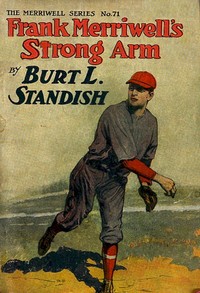
Before opening Frank Merriwell's Strong Arm; Or, Saving an Enemy — Key Ideas to Explore, the edition data offers a quick orientation: 72,560 words, 5 hr 16 min estimated reading time, and 31 detected text sections.
The text analysis averages about 12.2 words per sentence, while the detected sections provide another way to judge how the source is divided.
Project Gutenberg metadata also associates the work with “Baseball -- Juvenile fiction,” connecting these edition facts with the source record’s subject description.
Explore this collection
These alternatives are selected using recorded categories and estimated reading time.
About 312 minutes
Exploration Survival Adventure Tales
71,743 recorded words. 4 minutes difference from this book's estimate.
View Gutenberg source #62301About 323 minutes
Exploration Survival Adventure Tales
74,255 recorded words. 7 minutes difference from this book's estimate.
View Gutenberg source #58003About 297 minutes
Exploration Survival Adventure Tales
68,139 recorded words. 19 minutes difference from this book's estimate.
View Gutenberg source #57699Search stored excerpts and compare books → Choose by your preferences →
Choices use stored catalog measurements. Estimates vary with reading speed. A shared category is a catalog label, not a claim that two books have the same argument or literary quality.
Search reads excerpt text stored with this catalog and links to its associated Gutenberg record. The connection is stored in the site database; this tool does not recheck that every excerpt is word-for-word identical to that external record. Excerpt search does not cover every chapter and does not verify historical publication dates.
Catalog snapshot checked: 2026-09-25. Coverage: 91 public books, 91 available source excerpts.
Read the complete public-domain text at its original source.
Read on Project GutenbergFrank Merriwell's Strong Arm opens with a dormitory debate that sets the stage for the novel's blend of moral instruction and athletic adventure. The scene in Durfee, where Frank and his friends discuss the word 'No' and its consequences, reveals Standish's method: using rapid-fire dialogue to introduce themes of self-control and peer pressure. This conversational opening, punctuated by Browning's grunts and Ready's mockery, establishes a rhythm of banter that recurs throughout the text, often interrupted by more serious declarations from characters like Greg Carker.
The excerpt shows Standish's reliance on physical comedy—Carker's drunken stumble, the bookcase incident—to leaven the moralizing. This pattern of earnest speech undercut by slapstick suggests a deliberate structural choice: the novel moves between debate and action, with each scene building toward a physical confrontation or athletic feat. The title's 'Strong Arm' hints at both literal strength and the power of refusal, a duality explored through Frank's interactions.
The excerpt from Chapter 1 demonstrates how Standish uses dialogue to propel the narrative. The conversation about the word 'No' is not mere filler; it introduces a central moral dilemma—the difficulty of resisting temptation—that will be tested in later athletic and social scenarios. The rapid exchange, with characters like Ready and Browning interjecting, mimics the pace of a baseball game: quick, competitive, and full of verbal sparring. This technique recurs in later chapters, where debates about imperialism or personal honor precede physical action. Standish often lets a character hold forth at length—Carker's speech on the 'shackled slaves of toil' is a prime example—only to have another character puncture the rhetoric with a joke. This structural pattern of build and release keeps the reader engaged while advancing the plot.
Standish repeatedly uses images of physical control and its loss. In the opening, Carker's drunkenness is described through his inability to walk straight or speak clearly: 'walking cross-legged and stumbling over his own feet.' This loss of bodily control is contrasted with Frank's calm demeanor. The 'strong arm' of the title suggests both athletic prowess and the moral strength to say no. Later scenes likely involve baseball or other sports where physical skill is paramount. The image of the bookcase pinning Carker—'I had to take all the books off the shelves and lift the bookcase before I could get him out'—is a comic but vivid metaphor for how a lack of restraint can trap a person. These physical details ground the moral lessons in tangible, memorable scenes.
The excerpt is set entirely indoors—a dormitory room in Durfee—but the conversation anticipates outdoor action. Characters refer to Yale's campus, baseball, and the 'storm-clouds' of social change. Standish structures the novel by alternating between such interior scenes, where ideas are debated, and exterior scenes, where those ideas are tested. The dormitory setting allows for close focus on character dynamics: the group of friends functions as a chorus, with each member representing a different attitude (Ready's cynicism, Carker's earnestness, Frank's balance). The shift to outdoor scenes—likely baseball games or adventures—provides a change in pace and a chance for physical demonstration of the values discussed inside. This movement between spaces gives the novel a rhythmic structure that mirrors the ebb and flow of a sports season.
Standish frequently uses humor to undercut serious moments, preventing the moral lessons from becoming preachy. In the excerpt, Ready's interjections—'Cluk! cluk! git ap!'—mock Carker's earnestness, while the story of Carker's drunken mishap turns a lecture on temperance into a farce. This technique serves a structural purpose: it allows the author to introduce weighty topics (alcoholism, social responsibility) without alienating young readers. The humor also reinforces character traits—Ready is the joker, Carker the idealist—and creates a dynamic where the reader is encouraged to side with Frank's moderate, balanced approach. The laughter in the room, though directed at Carker, does not dismiss his concerns entirely; instead, it suggests that life's problems require both seriousness and a light touch.
Readers approaching Frank Merriwell's Strong Arm should pay attention to how Standish orchestrates these shifts between talk and action. The novel's structure rewards attention to the interplay of voices and the recurring physical motifs—a stumble, a strong arm, a bookcase—that tie moral lessons to concrete images. The excerpts suggest a work that is more carefully constructed than its dime-novel origins might imply, using dialogue and setting to create a rhythm that propels the story forward.
Reading about Frank Merriwell’s dialogue-heavy tension reminded me of winter evenings spent buried in my grandfather’s old books. That particular hush, where words carry the weight of action, came back while flipping through Snowed Up; or, The Sportman's Club in the Mountains — Text and Context. There’s a moment where a simple description of breath fogging in the cold says more than any chase scene, and I felt that same quiet ache of recognition.
A brief reflection can help important ideas stay with you longer.









