
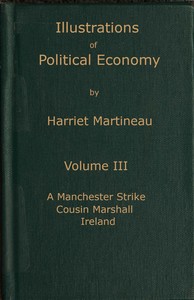
Illustrations of political economy, Volume 3 (of 9) by Harriet Martineau
Let's be clear: this isn't a novel with a single plot. Illustrations of Political Economy, Volume 3 is part of a massive nine-volume project where Harriet Martineau set out to teach the British public the principles of classical economics through fiction. Think of it as a story collection where each tale is built around a specific idea—like the benefits of free trade, the problems with protectionism, or the nature of capital.
The Story
Each story in this volume introduces you to a different set of characters—maybe a farmer, a merchant, or a group of workers. Martineau places them in a situation where an economic principle is at work. For example, one story might follow a community that insists on taxing foreign goods, only to see prices rise and choices shrink for everyone. Another might show how saving and investment (capital) allow a business to grow and create more jobs. The 'plot' is how these characters navigate the system, learn from their mistakes or successes, and ultimately demonstrate the lesson. It's storytelling with a very clear purpose: to make the invisible forces of the market visible and understandable.
Why You Should Read It
What grabbed me was Martineau's sheer nerve. A woman in the 1830s writing authoritatively on what was considered a man's subject, and choosing to do it through popular fiction? That's bold. But beyond the history, her method works. By giving economic ideas a human face, she makes them stick. You remember the struggling weaver's family better than you'd remember a textbook paragraph about tariffs. It's also a fascinating window into the concerns of early industrial Britain—the anxiety and excitement about a world changing at breakneck speed. Reading this, you get a sense of how people then tried to make sense of it all.
Final Verdict
This is not a breezy beach read. It's for the curious reader who loves history, ideas, or unique books that defy category. Perfect for anyone interested in the history of economic thought, Victorian social commentary, or pioneering women writers. If you've ever wondered how someone might try to explain complex ideas in a simple, engaging way, Martineau is a masterclass. Approach it as a series of thoughtful, character-driven parables, and you'll find a clever and surprisingly accessible book hiding behind its very serious title.
This digital edition is based on a public domain text. Thank you for supporting open literature.
Michael Gonzalez
1 year agoHonestly, the content flows smoothly from one chapter to the next. This story will stay with me.
Susan Brown
4 months agoI stumbled upon this title and it challenges the reader's perspective in an intellectual way. Definitely a 5-star read.
Jessica Miller
10 months agoThanks for the recommendation.
Oliver Anderson
1 year agoMy professor recommended this, and I see why.



Barbara Brown
1 year agoAfter hearing about this author multiple times, the flow of the text seems very fluid. Highly recommended.