About 238 minutes
Miss Lochinvar: A Story for Girls — A Reader’s Guide
Fantasy Juvenile Worlds
54,548 recorded words. 2 minutes difference from this book's estimate.
View Gutenberg source #66018
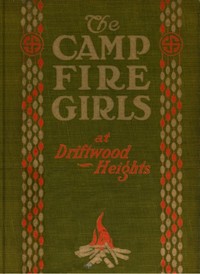
The source record for The Camp Fire Girls at Driftwood Heights — Inside the Classic measures this digital text at 55,172 words, 4 hr estimated reading time, and 22 detected text sections.
The text analysis averages about 14.3 words per sentence, while the detected sections provide another way to judge how the source is divided.
Project Gutenberg metadata also associates the work with “Western stories,” connecting these edition facts with the source record’s subject description.
Explore this collection
These alternatives are selected using recorded categories and estimated reading time.
About 238 minutes
Fantasy Juvenile Worlds
54,548 recorded words. 2 minutes difference from this book's estimate.
View Gutenberg source #66018About 243 minutes
Fantasy Juvenile Worlds
55,793 recorded words. 3 minutes difference from this book's estimate.
View Gutenberg source #55598About 245 minutes
Fantasy Juvenile Worlds
56,159 recorded words. 5 minutes difference from this book's estimate.
View Gutenberg source #56756Search stored excerpts and compare books → Choose by your preferences →
Choices use stored catalog measurements. Estimates vary with reading speed. A shared category is a catalog label, not a claim that two books have the same argument or literary quality.
Search reads excerpt text stored with this catalog and links to its associated Gutenberg record. The connection is stored in the site database; this tool does not recheck that every excerpt is word-for-word identical to that external record. Excerpt search does not cover every chapter and does not verify historical publication dates.
Catalog snapshot checked: 2026-09-25. Coverage: 91 public books, 91 available source excerpts.
Read the complete public-domain text at its original source.
Read on Project GutenbergThe novel opens with Ruth Garnier reciting the Torch Bearer's desire—"That light which has been given to me, I desire to pass undimmed to others"—in a ceremony that earns her a storm of applause from her fellow Camp Fire Girls. The scene establishes a tone of earnest self-improvement and group loyalty, with the girls gathered around a blazing camp fire under giant oaks. Despite the catalog subject "Western stories," the excerpts show no Western setting; instead, the action centers on a cottage at Driftwood Heights and the interpersonal dynamics among the girls.
Ruth Garnier, newly promoted to Torch Bearer, immediately exercises moral authority. In a tense private conversation with Blanche Shirly, Ruth discovers that Blanche has been secretly meeting a young man named Donald against her mother's wishes and Miss Drexal's rules. Ruth insists that Blanche write a letter ending the meetings, arguing that it is unfair to Blanche, her mother, and the Guardian. The exchange reveals Ruth's role as a disciplinarian among peers: she uses logic and appeals to duty rather than threats, though she leverages the possibility of exposure. Blanche reluctantly agrees, but her compliance is grudging, and Ruth suspects her engagement is a "sentimental schoolgirl and boy affair." This episode shows the Camp Fire structure as a framework for enforcing community standards, with Ruth acting as an informal enforcer.
Blanche's character emerges through her sullen negotiations. She tries to compromise by promising not to see Donald if Ruth does not write to her mother. Ruth counters by suggesting Blanche confess after the reunion, but she does not insist on immediate disclosure. Ruth's internal reasoning reveals a strategic patience: she believes that once separated from Donald, Blanche's interest will wane, and she resolves to win Blanche over to being "a Camp Fire Girl in earnest." This psychological observation—that Blanche is "far too selfish to be in love with anyone except Blanche"—is the most pointed character analysis in the excerpts. The conflict is not about external adventure but about internal discipline and the negotiation of secrets within a close-knit group.
The catalog lists "Western stories" and "Hiking -- Juvenile fiction" as primary subjects, yet the excerpts contain no Western landscape, cattle, or frontier tropes. The setting is a cottage at Driftwood Heights, and the only outdoor activity mentioned is a camp fire ceremony. Hiking is referenced in chapter titles ("A Hurried Homeward Hike") but does not appear in the provided text. "Caves" also appear in a chapter title ("A Disgruntled Explorer") but are absent from the excerpts. Instead, the narrative focuses on moral choices, peer pressure, and the Camp Fire Girls' organizational hierarchy. The subject "Honesty -- Juvenile fiction" is more apt, as the central conflict involves Blanche's deception and Ruth's insistence on truthfulness. Readers expecting a Western adventure will find a domestic drama of character and conscience.
Readers should approach this novel as a character-driven story about adolescent ethics within a structured club, not as a wilderness adventure. The excerpts suggest that the Camp Fire framework—with its ceremonies, ranks, and ideals—provides the real plot engine. Pay attention to how Ruth balances friendship with moral oversight, and how Blanche's resistance tests the group's cohesion. The hiking and cave exploration promised by chapter titles may offer scenic relief, but the core tension lies in the girls' negotiations of loyalty, secrecy, and self-improvement.
Reading about Ruth’s quiet grapple with honesty took me back to my own Torch Bearer moment—a whispered secret in a pine-scented tent. I found that same uncertain ache in Jack’s treasure hunt, where worth wasn’t gold but character. These old stories feel less like adventure and more like remembering who I was. A Chance for Himself; or, Jack Hazard and His Treasure — Reading Companion held that echo for me, too.
Use these questions to collect your thoughts before moving on.









