About 119 minutes
Jack's Two Sovereigns — Background and Themes
Fantasy Juvenile Worlds
27,183 recorded words. 15 minutes difference from this book's estimate.
View Gutenberg source #59313
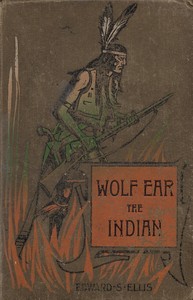
Before opening Wolf Ear the Indian: A story of the great uprising of 1890-91 — Text and Context, the edition data offers a quick orientation: 30,766 words, 2 hr 14 min estimated reading time, and 3 detected text sections.
The text analysis averages about 20.5 words per sentence, while the detected sections provide another way to judge how the source is divided.
Project Gutenberg metadata also associates the work with “Conduct of life -- Juvenile fiction,” connecting these edition facts with the source record’s subject description.
Explore this collection
These alternatives are selected using recorded categories and estimated reading time.
About 119 minutes
Fantasy Juvenile Worlds
27,183 recorded words. 15 minutes difference from this book's estimate.
View Gutenberg source #59313About 163 minutes
Fantasy Juvenile Worlds
37,362 recorded words. 29 minutes difference from this book's estimate.
View Gutenberg source #64012About 173 minutes
Fantasy Juvenile Worlds
39,593 recorded words. 39 minutes difference from this book's estimate.
View Gutenberg source #62026Search stored excerpts and compare books → Choose by your preferences →
Choices use stored catalog measurements. Estimates vary with reading speed. A shared category is a catalog label, not a claim that two books have the same argument or literary quality.
Search reads excerpt text stored with this catalog and links to its associated Gutenberg record. The connection is stored in the site database; this tool does not recheck that every excerpt is word-for-word identical to that external record. Excerpt search does not cover every chapter and does not verify historical publication dates.
Catalog snapshot checked: 2026-09-25. Coverage: 91 public books, 91 available source excerpts.
Read the complete public-domain text at its original source.
Read on Project GutenbergEllis opens with a direct address to "my young friends," asserting that the Indian population is not declining and that wars stem from "gross injustice towards the red men." This editorializing frame sets a moral tone, but the excerpts that follow shift quickly to a white youth, Brinton Kingsland, separated from his family in a gully during a storm. The narrative voice becomes intimate and immediate, tracking Brinton's physical discomfort, his pony Jack's instinctive movements, and his relief at meeting scout Nicholas Jackson. The promised "great uprising of 1890-91" recedes into background news—Jackson mentions Wounded Knee only as a battle Brinton has not heard of. The book's title character, Wolf Ear, does not appear in these passages.
The first chapter functions less as story and more as a lecture. Ellis tells readers that "the many wars between the United States and the Indians have been caused, almost without exception, by gross injustice towards the red men." He describes the Ghost Dance belief that a Messiah would drive out whites and restore Indian lands. This is the only direct engagement with the catalog subject "Dakota Indians — Wars, 1890-1891." Yet the narrative that follows does not dramatize this conflict from an Indian perspective. Instead, it centers on a white boy's ordeal. The preface thus stands apart from the action, offering a sympathetic view of Indian grievances that the plot does not embody.
Brinton's night in the gully is rendered through concrete physical details: the "flinty earth," the wind "shut out" by high banks, the removal of Jack's saddle, and the shared warmth of boy and pony. Ellis emphasizes the animal's agency: "by some means, which Brinton hardly understood, he clambered down into a gully." The pony's instinct, not the boy's decision, leads them to shelter. This attention to animal behavior recurs in the morning scene, where Jack "sprang up, and looked at him as if to announce that he was ready." The survival sequence is the most sustained passage in the excerpts, and it relies on sensory immediacy rather than the historical frame promised by the title.
Nicholas Jackson, a scout for General Miles, enters the gully with the exclamation "Well, I'll be shot!" He provides the only link to the wider conflict, mentioning he was at Wounded Knee and is now scouting for a supply company. But his role is strictly practical: he offers to help find Brinton's parents. The uprising itself remains offstage, reported as news rather than shown. Jackson's earlier warning to the Kingslands—"Had his advice been heeded, they would not have been in such sore straits"—implies a backstory of ignored danger. The excerpts give no further details, leaving the reader to infer that the family's predicament is a consequence of the larger hostilities, but the text focuses narrowly on the search and reunion.
Readers should note the gap between the catalog subjects—which list "Dakota Indians — Wars, 1890-1891" and "Youth and death"—and the actual content of these excerpts. The novel may well deliver on those themes later, but the opening chapters are a survival adventure with a white protagonist. The title character Wolf Ear does not appear, and the Indian uprising is referenced only through a scout's report. Approach the book expecting a conventional juvenile frontier tale rather than a direct treatment of the Ghost Dance conflict.
The rain slid down the windowpane as I closed Wolf Ear the Indian, struck by how little of Wolf Ear himself appears in his own story. That quiet absence lingered, leading me that afternoon to pick up Cricket — Text and Context, where the margins feel similarly respectful of what remains unheard. It wasn't a plan, just a hand reaching for the next shelf.
Answer a few questions and save a private reflection on this device.









