About 199 minutes
Peggy Goes Straw Hat — Text and Context
Fantasy Juvenile Worlds
45,682 recorded words. 3 minutes difference from this book's estimate.
View Gutenberg source #55826
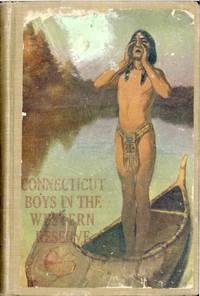
The catalog record for Connecticut Boys in the Western Reserve: A Tale of the Moravian Massacre — Inside the Classic provides practical reading context through 45,038 words, 3 hr 16 min estimated reading time, and 6 detected text sections.
The text analysis averages about 22.0 words per sentence, while the detected sections provide another way to judge how the source is divided.
Project Gutenberg metadata also associates the work with “Conduct of life -- Juvenile fiction,” connecting these edition facts with the source record’s subject description.
Explore this collection
These alternatives are selected using recorded categories and estimated reading time.
About 199 minutes
Fantasy Juvenile Worlds
45,682 recorded words. 3 minutes difference from this book's estimate.
View Gutenberg source #55826About 202 minutes
Fantasy Juvenile Worlds
46,415 recorded words. 6 minutes difference from this book's estimate.
View Gutenberg source #67087About 181 minutes
Fantasy Juvenile Worlds
41,477 recorded words. 15 minutes difference from this book's estimate.
View Gutenberg source #57413Search stored excerpts and compare books → Choose by your preferences →
Choices use stored catalog measurements. Estimates vary with reading speed. A shared category is a catalog label, not a claim that two books have the same argument or literary quality.
Search reads excerpt text stored with this catalog and links to its associated Gutenberg record. The connection is stored in the site database; this tool does not recheck that every excerpt is word-for-word identical to that external record. Excerpt search does not cover every chapter and does not verify historical publication dates.
Catalog snapshot checked: 2026-09-25. Coverage: 91 public books, 91 available source excerpts.
Read the complete public-domain text at its original source.
Read on Project GutenbergThe novel opens not with action but with weather: a dismally wet and cold September day, thick darkness, and a wind that moans in a ghostly way. This atmospheric setting immediately establishes a tone of unease and isolation. The first chapter, titled "A Rainy Night," uses the storm to force the protagonists to seek shelter at the Eagle tavern, a place that is no longer a tavern—a detail that signals the unreliability of appearances. Throughout the excerpts, weather and darkness recur as structural markers, often coinciding with moments of danger or moral ambiguity. The rain and wind are not mere backdrop; they actively shape the plot by driving characters into confined spaces where confrontations occur.
The narrative alternates between enclosed, threatening interiors and the open but perilous forest. The story begins at the inhospitable house, then moves to the cabin by the river, the tree-top camp, and the cave of the fortune hunters. Each enclosed space becomes a stage for verbal or physical conflict. In the opening, the boy knocks at a door that is slow to open; the man inside refuses hospitality. Later, in a tense scene, John is cornered by Duff and his men in what appears to be a cabin or clearing. The pattern is clear: interiors are places of entrapment and negotiation, while the forest offers movement but also ambush. The chapter titles themselves trace this movement: from "A Rainy Night" to "The Cabin by the River" to "The Cave of the Fortune Hunters." The journey is not just geographic but structural, as each new setting raises the stakes.
Darkness is a persistent image, often described in physical terms: "thick darkness had settled down," "the rain splashed drearily," "the wind moaned." Light is scarce and feeble—a single window with a faint glow, a half-open door. This contrast underscores the moral landscape: characters are literally and figuratively in the dark about each other's intentions. When John confronts Duff, the scene is lit only by what light seeps through the doorway. The absence of reliable light mirrors the difficulty of discerning truth from lies. Duff accuses John of murder, but the evidence is obscured. The novel uses this visual motif to reinforce its themes of suspicion and hidden motives. Even the dog Ring, who growls in the dark, becomes part of this sensory pattern: sound substitutes for sight.
The excerpts show that the novel builds around a series of confrontations, each escalating in intensity. The first is a verbal standoff at the tavern door, where the boy insists on lodging. The second, more violent, occurs when Duff and his men accuse John of killing Black Eagle. The dialogue is rapid and accusatory, with Duff using threats of hanging or scalping. John responds with defiance and physical action—clubbing his rifle, dodging, leaping onto Neb's back. These confrontations are structured like set pieces: a challenge, a pause for thought, a decisive action. The chapter titles hint at this pattern: "The Reward of Vigilance," "The Fate of Black Eagle," "A Cry from the Darkness." Each confrontation tests the protagonists' resourcefulness and moral resolve.
Ring, the dog, appears in the opening paragraph and again in the confrontation scene. In the first instance, the boy speaks to Ring to quiet him: "Now, never mind, Ring." The dog obeys instantly. This small detail establishes a bond of trust and control. Later, when John is threatened, Ring is present but not mentioned as acting—the focus is on human action. Yet the dog's earlier presence suggests a layer of loyalty and protection that the human characters lack. The dog is a silent witness, a contrast to the barking dog at the tavern. This recurring animal presence is a subtle structural element: Ring appears at moments of transition, marking the boundary between safety and danger. The novel uses the dog as a barometer of threat, without overstating its role.
The excerpts reveal a rhythm of long, tense dialogues punctuated by sudden physical action. In the tavern scene, the boy's calm request is met with gruff refusal; the exchange stretches over several paragraphs. Then, in the later confrontation, Duff's monologue is interrupted by John's outburst: "Why, you—you black liar." The shift from speech to action is abrupt: John clubs Duff with his rifle butt. This pattern recurs throughout the novel: characters talk at length about hidden letters, murders, and loyalties, then suddenly fight. The structure mirrors the uncertainty of frontier life, where words can be weapons and violence can erupt without warning. The novel's pacing depends on this alternation, keeping the reader off balance.
Readers will find that the novel's structure rewards attention to its recurring patterns: the movement from open to closed spaces, the play of light and dark, and the rhythm of confrontation. These elements are not merely decorative but shape the narrative's tension and moral questions. The excerpts suggest a work that uses its setting and imagery to explore themes of trust, survival, and justice on the frontier. Approach the text with an eye for these structural cues, and the story's deeper patterns will emerge.
Sometimes I think of Braden’s dark woods and sudden storms, and how the boys keep moving through them. It reminds me of another journey, lighter yet just as strange, in Puck's Broom The wonderful adventures of George Henry & his dog Alexander who went to seek their fortunes in the Once upon a time land — Themes and Context. Both stories feel like walking forward without quite knowing what shadows wait ahead.
Save your reaction, strongest insight, and memorable passage.









