About 278 minutes
Our Fellows; Or, Skirmishes with the Swamp Dragoons — Background and Themes
Exploration Survival Adventure Tales
63,775 recorded words. 3 minutes difference from this book's estimate.
View Gutenberg source #55402
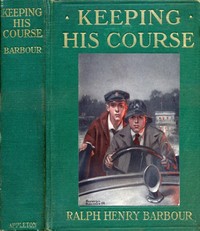
The source record for Keeping His Course — Inside the Classic measures this digital text at 63,162 words, 4 hr 35 min estimated reading time, and 23 detected text sections.
The text analysis averages about 13.5 words per sentence, while the detected sections provide another way to judge how the source is divided.
Project Gutenberg metadata also associates the work with “Baseball -- Juvenile fiction,” connecting these edition facts with the source record’s subject description.
Explore this collection
These alternatives are selected using recorded categories and estimated reading time.
About 278 minutes
Exploration Survival Adventure Tales
63,775 recorded words. 3 minutes difference from this book's estimate.
View Gutenberg source #55402About 272 minutes
Exploration Survival Adventure Tales
62,511 recorded words. 3 minutes difference from this book's estimate.
View Gutenberg source #68041About 269 minutes
Exploration Survival Adventure Tales
61,685 recorded words. 6 minutes difference from this book's estimate.
View Gutenberg source #62684Search stored excerpts and compare books → Choose by your preferences →
Choices use stored catalog measurements. Estimates vary with reading speed. A shared category is a catalog label, not a claim that two books have the same argument or literary quality.
Search reads excerpt text stored with this catalog and links to its associated Gutenberg record. The connection is stored in the site database; this tool does not recheck that every excerpt is word-for-word identical to that external record. Excerpt search does not cover every chapter and does not verify historical publication dates.
Catalog snapshot checked: 2026-09-25. Coverage: 91 public books, 91 available source excerpts.
Read the complete public-domain text at its original source.
Read on Project GutenbergFrom its opening sentence, Keeping His Course anchors itself in a specific geography: the float below the town landing at Greenhaven, Long Island, with a boy whose blue eyes match the June sky. The novel moves between two distinct settings—the harbor and the baseball diamond—each with its own rhythm and vocabulary. The excerpts show a story built on contrasts: the stillness of fog and the crack of a bat, the private ambition of Toby Tucker and the public spectacle of a game. Barbour’s prose is economical, favoring action and dialogue over interior reflection, and the narrative structure relies on a series of set pieces—a ferry ride, a baseball game, a fog-bound night—that advance the plot through physical movement.
The opening chapters establish the water as both setting and symbol. Toby sits on a float, staring across the bay to Johnstown, and the reader is immediately placed in a world defined by tides and distances. The ferry that Toby proposes to run becomes a literal and figurative vessel for his ambitions. Barbour uses the harbor to create a sense of bounded possibility: the water is a barrier to be crossed, a source of income, and a space for adventure. The recurring image of fog—described as “thick” and “rolling in from the bay”—serves as a narrative device, obscuring vision and creating suspense. In chapter XIII, fog delays a baseball game, linking the two primary settings. The excerpts suggest that the harbor is not merely backdrop but an active element that shapes the story’s pacing and conflicts.
The baseball sequences, though glimpsed only briefly in the excerpts, are clearly central to the novel’s structure. The chapter titles—“Toby Blocks the Plate” and “Toby Accepts a Challenge”—indicate that the diamond is where Toby’s resolve is tested. Barbour uses the game to externalize internal struggles: a close play at home plate becomes a metaphor for standing one’s ground. The excerpts show that the baseball scenes are not isolated but interwoven with the harbor plot; the same fog that delays the game also threatens navigation. The audience at the game is described as “flatteringly large,” suggesting that these scenes serve as communal gatherings where character is observed and judged. The novel’s structure alternates between private moments on the water and public performances on the field, creating a rhythm of introspection and action.
Barbour advances the plot largely through conversation. The excerpts contain extended dialogues between Toby and his father, and Toby and his sister Phebe, in which plans are debated and doubts aired. Mr. Tucker’s characteristic gesture—pushing back an imaginary hat and scratching his head—is a small but telling detail that recurs in the text, anchoring the father’s pragmatic skepticism. Toby’s ambition to attend Yardley Hall School is presented not as a given but as a subject of negotiation, with his father questioning the cost and his sister voicing loneliness. The dialogue is naturalistic, with interruptions and hesitations (“N-no, sir, not more, exactly”). This reliance on talk rather than internal monologue keeps the narrative brisk and grounded in immediate concerns. The structure of these scenes—a problem stated, a counterargument offered, a tentative resolution—mirrors the novel’s overall pattern of challenge and response.
The novel’s structure depends on physical movement: from the float to the ferry, from Greenhaven to Johnstown, from the harbor to the baseball field. The chapter titles emphasize transit—“Pursuit and Capture,” “The Stolen Launch,” “Lost in the Fog”—and the excerpts show a narrative that is always in motion. The ferry itself is a threshold object, linking Toby’s domestic life with his ambitions. The movement is not merely geographical but social: Toby’s desire to go to Yardley Hall represents a crossing into a different class and culture. The excerpts suggest that the novel’s tension arises from the gap between where Toby is and where he wants to be. The recurring image of the lighted window in chapter XVII hints at a destination or a goal, but the excerpts do not reveal whether it is reached. The reader is left to follow Toby’s course through a series of crossings, each one a test of direction and resolve.
Readers approaching Keeping His Course will find a story that moves steadily between two poles: the open water and the enclosed field. Pay attention to how Barbour uses weather—fog, haze, sunlight—to modulate the pace and to signal shifts in mood. The novel’s title is a promise of navigation, and the excerpts suggest that every chapter is a leg of a journey. The baseball scenes are not digressions but parallel tracks, each requiring a different kind of steadiness. The book rewards attention to its small, repeated gestures and its careful geography.
Reading the fog rolling over the Long Island shore in that Barbour piece, I felt the same quiet drifting I remember from a childhood Don Quixote—not the tilting, but the way both worlds hold their breath between one scene and the next. There’s a loneliness in water that windmills also know. It made me reach for Don Quixote of the Mancha, Retold by Judge Parry — Text and Context again, just to sit with that stillness.
Create a short personal record of your experience with this book.









