About 275 minutes
Keeping His Course — Inside the Classic
Exploration Survival Adventure Tales
63,162 recorded words. 3 minutes difference from this book's estimate.
View Gutenberg source #62027
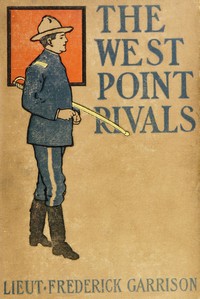
The West Point Rivals: or, Mark Mallory's Stratagem — A Reader’s Guide can be approached with a clearer sense of reading commitment from its source measurements: 62,511 words, 4 hr 32 min estimated reading time, and 43 detected text sections.
The text analysis averages about 14.0 words per sentence, while the detected sections provide another way to judge how the source is divided.
Project Gutenberg metadata also associates the work with “Conduct of life -- Juvenile fiction,” connecting these edition facts with the source record’s subject description.
Explore this collection
These alternatives are selected using recorded categories and estimated reading time.
About 275 minutes
Exploration Survival Adventure Tales
63,162 recorded words. 3 minutes difference from this book's estimate.
View Gutenberg source #62027About 269 minutes
Exploration Survival Adventure Tales
61,685 recorded words. 3 minutes difference from this book's estimate.
View Gutenberg source #62684About 278 minutes
Exploration Survival Adventure Tales
63,775 recorded words. 6 minutes difference from this book's estimate.
View Gutenberg source #55402Search stored excerpts and compare books → Choose by your preferences →
Choices use stored catalog measurements. Estimates vary with reading speed. A shared category is a catalog label, not a claim that two books have the same argument or literary quality.
Search reads excerpt text stored with this catalog and links to its associated Gutenberg record. The connection is stored in the site database; this tool does not recheck that every excerpt is word-for-word identical to that external record. Excerpt search does not cover every chapter and does not verify historical publication dates.
Catalog snapshot checked: 2026-09-25. Coverage: 91 public books, 91 available source excerpts.
Read the complete public-domain text at its original source.
Read on Project GutenbergThe West Point Rivals opens not with a parade ground or classroom, but with a tent in summer encampment, where a cadet named Texas reads a circus bill. This choice of setting—a temporary canvas city—establishes the book’s structural pattern: scenes shift rapidly between the regulated academy grounds and the unruly spaces just beyond its borders. The circus at Highland Falls, a cave used by counterfeiters, a camp in the woods, and the Hudson River itself become stages for escapades that test the cadets’ courage and loyalty. The narrative moves like a series of set pieces, each introduced by a challenge or a dare, and each resolved by a combination of physical action and verbal wit.
The summer encampment is the book’s primary setting, but it functions less as a static backdrop than as a launching point. In the opening chapter, Texas leaps to his feet in a tent, vowing to ride a bronco. Later, the Parson’s theatrical outburst occurs in the same encampment, with cadets listening from outside. The tents are described as temporary shelters, yet they host elaborate pranks, conspiracy discussions, and even a mock battle. This repeated return to the encampment creates a rhythm: the cadets leave for adventures and return to the tents to regroup. The physical space of the encampment—its canvas walls, its proximity to the river and woods—mirrors the cadets’ liminal status, caught between boyhood mischief and military discipline.
The narrative frequently moves from the ordered world of West Point to wilder, uncontrolled locations. The circus at Highland Falls is a commercial spectacle; the cave is a hidden, lawless space; the woods around Camp Lookout become a site for a “desperate conspiracy.” Each transition is marked by a journey—by foot, by boat, or by a stolen moment of leave. The river itself appears repeatedly as a boundary and a conduit: excitement on the river, a battle with the enemy near the water, and a moment of deadly peril involving a swim. These movements are not merely scenic; they allow the author to test the cadets’ resourcefulness outside the academy’s rules. The contrast between the regulated post and the unpredictable terrain beyond it drives much of the plot’s tension.
A striking visual motif in the excerpts is the skeleton. When yearlings mistake the Parson’s head for a skull, he retaliates by showering them with “the skeletons of the counterfeiters”—a literal bone-throwing. This image recurs in the Parson’s own speech: he invokes “the bones of my ancestors” and later swears by the Styx. The skeletons are both props (from a cave hideout) and symbols of the macabre humor that runs through the book. The Parson’s voice, with its mock-heroic invocations of Zeus, Apollo, and Hector, turns every confrontation into a theatrical performance. His threats are delivered in elaborate classical allusions, and his physical appearance—long arms, bony features, blazing cheeks—reinforces the skull-like imagery. This combination of physical comedy and verbal bombast gives the book a distinctive, almost vaudevillian tone.
The subtitle, Mark Mallory’s Stratagem, points to a central plot mechanism: a clever plan that drives the action. The chapter titles suggest a series of stratagems: “Accepting a Challenge,” “Another Escapade is Planned,” “A Trap for Mallory.” Each chapter tends to revolve around a scheme—to attend the circus, to raid a cave, to exact revenge. The structure is episodic, with each stratagem introducing a new complication. The excerpts show that these plans often involve deception (a fake skull, a hidden cave) and are countered by rival cadets. The word “stratagem” itself implies a military cunning, and the book treats each prank or conspiracy as a miniature campaign. This pattern of plan, execution, and consequence gives the narrative a forward momentum, even as the setting shifts from tent to river to jail.
Readers will find that the book’s pleasures lie less in plot twists than in the texture of its scenes: the quick banter among cadets, the physical comedy of the Parson’s outbursts, and the vivid descriptions of the Hudson Valley landscape. Pay attention to how each chapter begins with a challenge or a dare—this is the engine that keeps the story moving. The West Point setting is not merely decorative; it provides a framework of rules that the characters constantly test, and the recurring images of bones, tents, and rivers give the book a visual coherence that rewards close reading.
That rainy afternoon, the West Point cadets’ theatrical schemes lingered, especially how Sinclair shifted from tents to caves so effortlessly. It reminded me of another kind of journeying, quieter and less staged. So I found myself, almost without deciding, opening Bertha's Visit to Her Uncle in England; vol. 1 [of 3] — Reading Notes, where the scenery moves at a walking pace, and the weather feels more real than any stratagem.
A brief reflection can help important ideas stay with you longer.









