About 261 minutes
On Time; or, Bound to Get There — Reading Companion
Fantasy Juvenile Worlds
60,010 recorded words. 2 minutes difference from this book's estimate.
View Gutenberg source #65552
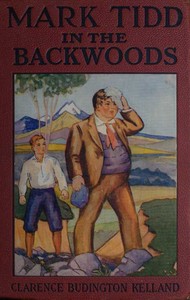
Mark Tidd in the Backwoods — Reading Companion can be approached with a clearer sense of reading commitment from its source measurements: 60,269 words, 4 hr 23 min estimated reading time, and 22 detected text sections.
The text analysis averages about 12.9 words per sentence, while the detected sections provide another way to judge how the source is divided.
Project Gutenberg metadata also associates the work with “Friendship -- Juvenile fiction,” connecting these edition facts with the source record’s subject description.
Explore this collection
These alternatives are selected using recorded categories and estimated reading time.
About 261 minutes
Fantasy Juvenile Worlds
60,010 recorded words. 2 minutes difference from this book's estimate.
View Gutenberg source #65552About 267 minutes
Fantasy Juvenile Worlds
61,364 recorded words. 4 minutes difference from this book's estimate.
View Gutenberg source #55098About 268 minutes
Fantasy Juvenile Worlds
61,452 recorded words. 5 minutes difference from this book's estimate.
View Gutenberg source #56207Search stored excerpts and compare books → Choose by your preferences →
Choices use stored catalog measurements. Estimates vary with reading speed. A shared category is a catalog label, not a claim that two books have the same argument or literary quality.
Search reads excerpt text stored with this catalog and links to its associated Gutenberg record. The connection is stored in the site database; this tool does not recheck that every excerpt is word-for-word identical to that external record. Excerpt search does not cover every chapter and does not verify historical publication dates.
Catalog snapshot checked: 2026-09-25. Coverage: 91 public books, 91 available source excerpts.
Read the complete public-domain text at its original source.
Read on Project GutenbergClarence Budington Kelland opens Mark Tidd in the Backwoods with a first-person narrator, Binney Jenks, whose breathless, colloquial voice immediately establishes the story's tone. The very first line—"It all started just before school was out"—plunges readers into a familiar, informal world. Binney's speech is peppered with contractions, exclamations, and physical restlessness: "I had to stand up and prance around the room." This choice of narrator shapes the entire narrative, filtering events through a boy's excited, sometimes comically self-important perspective.
Kelland gives Binney a distinctive, unpolished diction that feels authentic to a young boy. He uses phrases like "the whole kit and bilin' of us" and "I broke it all up into short sentences like that." The dialogue is peppered with dialectal contractions: "dassent" for "dare not," "hain't" for "haven't," and "gittin'" for "getting." This vernacular choice grounds the story in a specific time and place—rural Michigan in the early 1910s—and makes the characters' interactions feel spontaneous rather than literary. Even Mark Tidd's stammer is rendered phonetically: "L-l-light somewheres." Such details suggest Kelland listened carefully to how boys actually spoke.
Kelland builds humor through precise physical description and timing. When Binney spies on Collins and Jiggins after their dunking, he notes: "There was Jiggins, fat as anything, with sweat trickling down his face and river-water running down his legs." The image is vivid and slightly absurd. The men's reaction—first scowling, then laughing until they "laid down on the ground and rolled and yelled"—shows Kelland's understanding of comic release. He also uses contrast for effect: Binney's proud, silent crawl is immediately undercut by his panic when he finds himself six feet from the men. The scene's rhythm—tension, observation, then shared laughter—demonstrates careful pacing.
Kelland's descriptions of the backwoods setting are economical but sensory. He mentions "a hummock in the way, and considerable high grass and bushes" to block the boys' view. The canoe trip brings details like "soft and squashy" butter and a meal of bread and butter that "don't sound like you'd be very interested in it" but is nonetheless enjoyed. The men's wet clothes are described as "cold and clammy and nasty." These small, tactile observations root the adventure in physical reality. Kelland avoids romanticizing the wilderness; instead, he emphasizes discomfort, hunger, and the need for caution—"We dassent make a fire"—which adds a layer of genuine risk to the boys' escapade.
Kelland uses dialogue to reveal character quickly. Mark Tidd's stammer and his calm, measured responses contrast with Binney's impulsiveness. When Binney bursts in, Mark says, "You're floppin' around l-l-l-like Bill Durfee's one-legged ch-chicken"—a simile that is both funny and revealing of Mark's dry wit. The men, Collins and Jiggins, speak in a more rural, adult idiom: "I hain't getting cheated, to speak of" and "That fat boy would have enjoyed this." Their banter shows a camaraderie that mirrors the boys' own friendship. Kelland also uses dialogue to advance the plot: the men's conversation reveals they are following the boys, and their comments about the "fat kid" (Mark) and eating habits add a layer of dramatic irony.
Kelland structures the narrative as a series of episodic adventures, each introduced by a new chapter. The opening chapter establishes the premise—an invitation to Uncle Hieronymous's cabin—and then quickly moves into action. The pacing is brisk: Binney's excitement, the parental permission, and the gathering of the boys all happen within a few pages. Kelland uses short paragraphs and frequent dialogue to maintain momentum. The excerpts show a pattern of action followed by reflection: after the tense crawl, Binney pauses to describe the scene and his own feelings. This alternation keeps the story engaging without sacrificing character development.
Readers attentive to Kelland's craft will notice how he balances humor with genuine tension, and how the boys' resourcefulness is tested by both nature and human adversaries. The author's choice to use a first-person narrator with a distinct voice gives the story an immediacy that invites readers to experience the adventure alongside Binney. Pay attention to the small details—the way characters speak, the physical sensations of the wilderness—as they reveal Kelland's careful construction of a believable, entertaining world.
Reading this companion’s attention to Kelland’s slow comic timing, I remembered sitting on a porch swing, puzzling over how a voice can feel like a place. The same quiet surprise came later with Peggy Goes Straw Hat — Text and Context, where the town’s chatter felt like weather. Both bookish guides made me reread a sentence aloud, just to hear the woods behind the words.
Answer a few questions and save a private reflection on this device.









