
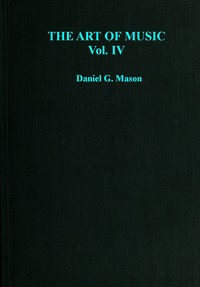
The art of music, Vol. 04 (of 14) : Music in America by Daniel Gregory Mason et al.
Let's be clear: this isn't a novel. 'Music in America' is the fourth volume in a massive 14-part series called 'The Art of Music,' published over a century ago. The plot, so to speak, is the search for an American musical voice. The book is a collection of essays, and Daniel Gregory Mason is the main contributor we know by name.
The Story
The book walks us through American music from the 1600s up to 1915. It starts with the simple hymns of the Puritans, moves through the genteel European-style concerts of the 1800s, and finally gets to the lively, 'unrefined' popular music of its day—think Stephen Foster's songs and early ragtime. The central tension is between the 'cultivated' tradition (trying to copy European opera and symphonies) and the 'vernacular' tradition (the folk, spiritual, and popular music born here). The writers observe this split and seem genuinely worried. They see all this raw, energetic sound around them but wonder if it can ever be shaped into something the rest of the world will respect as 'high art.'
Why You Should Read It
Here's what got me: reading this is like listening to a conversation from the past that we're still having today. You can feel their frustration and hope. They're trying to pin down American culture while standing in the middle of it, which is impossible and kind of beautiful. It's also hilariously and humbly off-target at times. They discuss ragtime but have no idea that in just a few years, jazz will erupt and answer many of their questions in a way they couldn't imagine. That gap—between their analysis and what actually happened—is thrilling. It reminds you that history isn't neat. People in the past didn't know they were in the 'past.' They were just people, arguing about the future.
Final Verdict
This is a niche read, but a rewarding one. It's perfect for music lovers who enjoy history's behind-the-scenes, or anyone curious about how a nation builds a cultural identity. If you like the idea of a primary source document—a real-time diagnosis of American art before its big 20th-century breakout—you'll find this compelling. It's not a light read, but it's a short one, and it offers a unique, almost prophetic, look at a soundscape on the verge of revolution.
This is a copyright-free edition. Thank you for supporting open literature.
Robert Scott
1 year agoWithout a doubt, it manages to explain difficult concepts in plain English. One of the best books I've read this year.
John Johnson
6 months agoI was skeptical at first, but it manages to explain difficult concepts in plain English. Exactly what I needed.
Karen Thompson
1 year agoI came across this while browsing and the arguments are well-supported by credible references. I will read more from this author.
Liam Gonzalez
1 year agoMy professor recommended this, and I see why.



William Jones
11 months agoAfter a thorough walkthrough of the table of contents, the level of detail in the second half of the book is truly impressive. A mandatory read for anyone in this industry.