About 201 minutes
Silver Rags — Reading Companion
Exploration Survival Adventure Tales
46,008 recorded words. 7 minutes difference from this book's estimate.
View Gutenberg source #66956
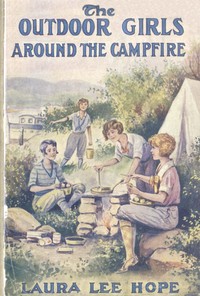
For The Outdoor Girls Around the Campfire; or, The Old Maid of the Mountains — Reading Companion, the stored edition analysis reports 47,647 words, 3 hr 28 min estimated reading time, and 35 detected text sections.
The text analysis averages about 16.3 words per sentence, while the detected sections provide another way to judge how the source is divided.
Project Gutenberg metadata also associates the work with “Adventure stories,” connecting these edition facts with the source record’s subject description.
Explore this collection
These alternatives are selected using recorded categories and estimated reading time.
About 201 minutes
Exploration Survival Adventure Tales
46,008 recorded words. 7 minutes difference from this book's estimate.
View Gutenberg source #66956About 217 minutes
Exploration Survival Adventure Tales
49,733 recorded words. 9 minutes difference from this book's estimate.
View Gutenberg source #64123About 221 minutes
Exploration Survival Adventure Tales
50,715 recorded words. 13 minutes difference from this book's estimate.
View Gutenberg source #63407Search stored excerpts and compare books → Choose by your preferences →
Choices use stored catalog measurements. Estimates vary with reading speed. A shared category is a catalog label, not a claim that two books have the same argument or literary quality.
Search reads excerpt text stored with this catalog and links to its associated Gutenberg record. The connection is stored in the site database; this tool does not recheck that every excerpt is word-for-word identical to that external record. Excerpt search does not cover every chapter and does not verify historical publication dates.
Catalog snapshot checked: 2026-09-25. Coverage: 91 public books, 91 available source excerpts.
Read the complete public-domain text at its original source.
Read on Project GutenbergThe Outdoor Girls Around the Campfire opens with a motorboat cutting across a lake, its rhythmic “putt-putt” establishing a pattern of mechanical and natural sounds that will recur throughout the narrative. The story alternates between daylight scenes of planning and cheerful banter—complete with slangy dialogue and mock-heroic declarations about pork and beans—and nighttime sequences where the same setting becomes charged with unease. This structural oscillation is reinforced by a recurring image: the campfire itself, which shifts from a source of warmth and companionship to a fragile barrier against the dark.
The book’s first chapter, “Plans,” establishes a brisk, optimistic tone as the girls discuss speed and competition on the lake. Yet the excerpts show that this daylight confidence is repeatedly undercut by nightfall. In Chapter XV, the same characters who joked about fishing lines and canned beans find themselves lying rigid in their tent, listening to “queer crunchings and snapping of twigs.” The narrative structure depends on this contrast: each day’s activity—boating, setting up camp, cooking—is followed by a night of heightened alertness. The girls’ reluctance to “turn in” is stated explicitly, and the text lingers on the transition from wakefulness to sleep, only to shatter it with unexplained noises.
From the opening motorboat throb to the “rhythmic drip-drip of the rain,” the story uses sound to mark shifts in mood and to build suspense. The excerpts highlight several distinct auditory cues: the mechanical putt-putt of the boat, the giggling and slangy chatter of the girls, and then the “shuffling noise” that penetrates sleep. Notably, the narrative often pairs sound with its absence—the night becomes “curiously still” before a noise erupts. This technique creates a rhythm of tension and release that is independent of plot events. Even the toy pistol, hidden under a blanket, is introduced not through its use but through the tactile memory of its presence, a silent object that amplifies the threat of sound.
The tent functions as a permeable boundary between the known and the unknown. In the excerpts, the girls repeatedly test this boundary: they peer out, fling open the flap, and step into the blackness. The tent is described as “improvised,” suggesting a fragile construction, and its canvas amplifies sounds from outside. The narrative emphasizes the threshold—the moment of crossing from inside to outside—as a point of maximum vulnerability. When Mollie “sprang to her feet” and “crept to the flap opening,” the action mirrors an earlier scene where Grace raised herself on her elbow to investigate a sniffing sound. These repeated movements create a pattern of approach and retreat, reinforcing the tent’s role as a contested space between safety and danger.
Two elements dominate the sensory landscape: water and fire. The lake is described as “glassy,” with the boat leaving a “frothy white trail,” while the campfire is built, sat beside, and allowed to smolder. These images are not merely decorative; they structure the girls’ activities and emotional states. Water represents motion, daylight, and control—the motorboat responds to the wheel. Fire represents stasis, night, and uncertainty—the campfire “can lose some of its charm if gazed upon too long.” The narrative moves between these poles: a day on the water gives way to an evening around the fire, which in turn gives way to a night of listening to rain and unidentified shuffling. The smoldering embers of the fire become the last visual anchor before darkness closes in.
Readers attentive to the book’s structure will notice how the author uses repetition with variation: each night brings a new sound, a new movement toward the tent flap, a new reason to reach for the toy pistol. The story does not resolve these tensions quickly; instead, it sustains them through careful pacing and sensory detail. Pay particular attention to the transitions between chapters, where the shift from day to night often occurs without explicit warning, leaving the reader as disoriented as the characters.
I found myself thinking, after rereading the campfire lull, how the night’s quiet tension softened under the toy pistol’s weight. That same gentleness of threat slipping into play reminded me suddenly of another era’s barnstorming, where a stage’s makeshift courage held its own hidden fire. It was Frank Merriwell's Own Company; Or, Barnstorming in the Middle West — Story, Setting & Ideas that lingered, a kinder echo of the same unspoken unease.
Answer a few questions and save a private reflection on this device.









