About 238 minutes
Frank Hunter's Peril — Reading Notes
Exploration Survival Adventure Tales
54,677 recorded words. 4 minutes difference from this book's estimate.
View Gutenberg source #56602
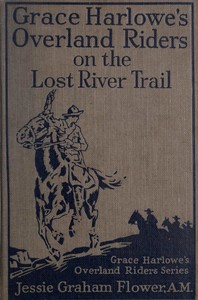
This digital edition of Grace Harlowe's Overland Riders on the Lost River Trail — Story, Setting & Ideas is described by source-level measurements including 53,737 words, 3 hr 54 min estimated reading time, and 27 detected text sections.
The text analysis averages about 12.9 words per sentence, while the detected sections provide another way to judge how the source is divided.
Project Gutenberg metadata also associates the work with “Western stories,” connecting these edition facts with the source record’s subject description.
Explore this collection
These alternatives are selected using recorded categories and estimated reading time.
About 238 minutes
Exploration Survival Adventure Tales
54,677 recorded words. 4 minutes difference from this book's estimate.
View Gutenberg source #56602About 228 minutes
Exploration Survival Adventure Tales
52,308 recorded words. 6 minutes difference from this book's estimate.
View Gutenberg source #61784About 221 minutes
Exploration Survival Adventure Tales
50,715 recorded words. 13 minutes difference from this book's estimate.
View Gutenberg source #63407Search stored excerpts and compare books → Choose by your preferences →
Choices use stored catalog measurements. Estimates vary with reading speed. A shared category is a catalog label, not a claim that two books have the same argument or literary quality.
Search reads excerpt text stored with this catalog and links to its associated Gutenberg record. The connection is stored in the site database; this tool does not recheck that every excerpt is word-for-word identical to that external record. Excerpt search does not cover every chapter and does not verify historical publication dates.
Catalog snapshot checked: 2026-09-25. Coverage: 91 public books, 91 available source excerpts.
Read the complete public-domain text at its original source.
Read on Project GutenbergJosephine Chase, writing as Jessie Graham Flower, builds the Overland Riders' adventure through a mix of brisk action and character-driven banter. In the bear-attack sequence, the narrative shifts between Ham White's terse commands—"Now! All together. We've got them going!"—and the riders' comic relief, as when Stacy Brown claims bear meat is "too coarse for Emma and me." This juxtaposition of danger and domestic squabbling defines the series' tone.
Chase's dialogue distinguishes each rider: Emma's mock-serious rebukes, Hippy's dry observations, and Stacy's evasions. The guide's speech, with its laconic authority ("I suspect that we shall have some bear meat for breakfast just the same"), anchors the group. The prose favors short, declarative sentences during action—"The bears had torn and uprooted two tents"—and loosens into repartee during lulls, a rhythm that keeps the pace lively.
Chase uses dialogue to sketch each Overland Rider quickly. Stacy Brown's protests—"I don't care. I prefer venison anyway"—reveal his laziness and appetite, while Emma Dean's teasing retorts ("More is the meat of your argument, as usual") show her sharp wit. The guide, Ham White, speaks in measured, practical phrases: "We will dress him, and then we shall have to guard the carcass." His authority is never questioned; his words carry the weight of experience. Hippy Wingate, the lieutenant, matches the guide's competence with a dry humor that bridges the two groups. Even minor lines, like Stacy's plea to "turn in," reinforce his role as the comic foil. The dialogue rarely carries exposition; instead, it reveals personality through conflict and cooperation.
Ham White's speech patterns mark him as the expedition's anchor. He uses imperative verbs ("Be careful that you don't shoot towards the ponies") and understated predictions ("we may look for visitors before daylight") that prove accurate. His language is plain, avoiding the melodrama of the riders' exclamations. When he says, "A man has a right to defend himself, though I always try to keep within the law," the line reveals a code of conduct that contrasts with the outlaws' lawlessness. Chase gives him few adjectives; his authority comes from action and foresight, not description. This restraint makes his rare moments of excitement—"There is peril in the air" from the chapter titles—more striking.
Stacy Brown's mishaps provide a running joke. After a bear runs between his legs, the narrative notes "the beast was as badly frightened as was the fat boy," a deflation of danger. His confession about the bear-bait is drawn out through Emma's mock-serious prompting: "Be a good little George Washington now, and confess." Chase repeats the pattern of Stacy trying to escape work ("I think I'll turn in") and being overruled. The humor relies on understatement—the bears' attack becomes "our unexpected Sunday dinner." Even the guide plays along, asking "Where did you get the stuff?" with a straight face. This comic thread lightens the peril without undermining it.
Chase's action scenes use short, physical details: "The bears had torn and uprooted two tents and worked other havoc." She avoids elaborate metaphors, preferring concrete nouns and verbs. The setting is sketched minimally—"the coals of the evening fire were still smouldering"—enough to orient the reader without slowing the pace. Sound effects ("a grunt indicated that an animal had been hit") and animal reactions ("the ponies were snorting in fright") build tension. The description of dressing the bear is clinical: "hung up from a pole which was thrust through its hocks." This matter-of-factness keeps the adventure grounded, even when the plot veers toward melodrama. The forest fire and lost river trail are evoked through similar sensory shorthand.
Readers attentive to Chase's craft will notice how she balances multiple tones within a single scene. The bear episode, for instance, moves from panic to practical work to comedy, all while advancing the group's dynamics. Her dialogue-driven characterization and lean descriptions reward a close reading of how each rider speaks and acts. The excerpts offer a clear window into the series' formula: peril leavened with humor, authority vested in the guide, and a cast whose voices remain distinct even in crisis.
After finishing the editorial note on Grace Harlowe’s river journey, I kept thinking about how the guide’s steady voice held both humor and danger so quietly. It reminded me of the quiet authority in The Young Scout: The Story of a West Point Lieutenant — Themes and Context—that same calm patience when everything feels uncertain. Some books just sit with you like that, softly.
Capture what you thought, learned, and would like to remember.









