About 234 minutes
Grace Harlowe's Overland Riders on the Lost River Trail — Story, Setting & Ideas
Exploration Survival Adventure Tales
53,737 recorded words. 6 minutes difference from this book's estimate.
View Gutenberg source #62946
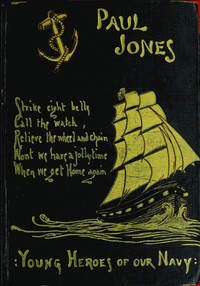
Before opening Paul Jones — Background and Themes, the edition data offers a quick orientation: 52,308 words, 3 hr 48 min estimated reading time, and 7 detected text sections.
The text analysis averages about 22.0 words per sentence, while the detected sections provide another way to judge how the source is divided.
Project Gutenberg metadata also associates the work with “Sailing -- Juvenile fiction,” connecting these edition facts with the source record’s subject description.
Explore this collection
These alternatives are selected using recorded categories and estimated reading time.
About 234 minutes
Exploration Survival Adventure Tales
53,737 recorded words. 6 minutes difference from this book's estimate.
View Gutenberg source #62946About 221 minutes
Exploration Survival Adventure Tales
50,715 recorded words. 7 minutes difference from this book's estimate.
View Gutenberg source #63407About 238 minutes
Exploration Survival Adventure Tales
54,677 recorded words. 10 minutes difference from this book's estimate.
View Gutenberg source #56602Search stored excerpts and compare books → Choose by your preferences →
Choices use stored catalog measurements. Estimates vary with reading speed. A shared category is a catalog label, not a claim that two books have the same argument or literary quality.
Search reads excerpt text stored with this catalog and links to its associated Gutenberg record. The connection is stored in the site database; this tool does not recheck that every excerpt is word-for-word identical to that external record. Excerpt search does not cover every chapter and does not verify historical publication dates.
Catalog snapshot checked: 2026-09-25. Coverage: 91 public books, 91 available source excerpts.
Read the complete public-domain text at its original source.
Read on Project GutenbergThe introduction to Seawell's Paul Jones immediately establishes a dual commitment: the author states that while the story is "professedly and confessedly a romance," history has been consulted at every point, with log books, journals, and biographies searched—especially those of Paul Jones himself. This framing prepares readers for a narrative that weaves documented events with invented scenes and dialogue. The opening also signals the author's aim to present Jones as both a daring naval commander and a figure of "sublime common sense," quoting John Adams to underscore his strategic depth.
Seawell's introduction reveals a careful approach: she claims that "nothing of consequence has been put in that is not historically true," and that language ascribed to Jones is, whenever possible, drawn from his own letters and journals. This creates a hybrid text where fictional passages are meant to be consistent with known facts. Readers should note that the narrative voice often shifts between omniscient historical summary and close-up dialogue, as when Jones and Dale exchange glances upon sighting the Baltic fleet. The author's reliance on primary sources means that key speeches and decisions may echo actual records, but the surrounding conversations—like the banter between Bill Green and Danny Dixon—are invented to add color and humor.
The excerpt leading to Flamborough Head demonstrates how Seawell builds suspense through small, telling details. The appearance of the white ship is described as "nothing remarkable," yet both Jones and Dale feel a prophetic certainty. The dialogue is terse and charged: "Sir," said Dale, "that ship—that ship—" "Is the first ship of the Baltic fleet," replies Jones. This exchange, followed by the order to prepare for close-quarters action, creates a rapid escalation from observation to imminent battle. The author also interjects moments of dark humor among the crew, such as Danny Dixon's teasing about sawdust and blood, which lightens the tension while underscoring the men's bravado. These contrasting tones—prophetic intensity and sailor's banter—are a hallmark of Seawell's style.
Seawell distinguishes between the officers' grave determination and the crew's rough camaraderie. Jones and Dale speak in measured, intense phrases focused on strategy and presentiment, while Bill Green and Danny Dixon trade insults laced with gallows humor. Danny's retort that he is "mighty proud to be rated with" Jones, after the British put a price on the captain's head, shows how the crew's loyalty is expressed through irreverent pride. This interplay suggests that the novel uses the common sailors to humanize the heroic narrative, providing a ground-level perspective on the events. Readers should watch for how these two registers—formal and colloquial—interact throughout the story.
A recurring motif in the excerpt is the sense of foreboding and destiny. Both Jones and Dale experience a "prophetic" feeling when they see the first ship, and Jones declares, "I feel it, I know it." This language of certainty, combined with the description of the fleet appearing "like a flock of huge swans," gives the approaching battle an almost mythic quality. Seawell uses this to elevate the conflict beyond mere tactical engagement, framing it as a moment of historical and personal destiny. The crew's cheers and Jones's sparkling eyes reinforce the idea that this is a climactic encounter. However, the author does not reveal the outcome in the excerpt, leaving readers to anticipate how the actual historical battle will unfold within the fictional framework.
As you read, pay attention to how Seawell signals transitions between documented fact and invented detail. The introduction's promise of historical fidelity may be tested in scenes where dialogue or inner thoughts are provided without direct source attribution. The banter among sailors, while entertaining, is likely fictional, whereas Jones's strategic pronouncements may draw on his writings. Noting these shifts can deepen your appreciation of how the author balances romance and history.
Reading about the muster before the Bon Homme Richard fight, I remembered sitting on my grandfather’s porch, the same quiet anticipation before a storm. That feeling of waiting, of bravery being a slow, deliberate choice, came back. It’s the same atmosphere I found once in Bertha's Visit to Her Uncle in England; vol. 3 [of 3] — Story, Setting & Ideas, where every ordinary moment seems to hold its breath before something unspoken.
Capture what you thought, learned, and would like to remember.









