About 202 minutes
Mopsa the Fairy — Themes and Context
Fantasy Juvenile Worlds
46,415 recorded words. 12 minutes difference from this book's estimate.
View Gutenberg source #67087
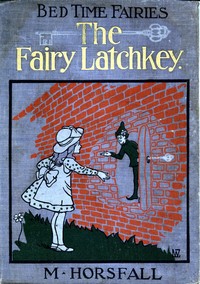
Before opening The Fairy Latchkey — Context and Discussion, the edition data offers a quick orientation: 49,117 words, 3 hr 34 min estimated reading time, and 25 detected text sections.
The text analysis averages about 23.5 words per sentence, while the detected sections provide another way to judge how the source is divided.
Project Gutenberg metadata also associates the work with “Fairies -- Juvenile fiction,” connecting these edition facts with the source record’s subject description.
Explore this collection
These alternatives are selected using recorded categories and estimated reading time.
About 202 minutes
Fantasy Juvenile Worlds
46,415 recorded words. 12 minutes difference from this book's estimate.
View Gutenberg source #67087About 199 minutes
Fantasy Juvenile Worlds
45,682 recorded words. 15 minutes difference from this book's estimate.
View Gutenberg source #55826About 231 minutes
Fantasy Juvenile Worlds
52,958 recorded words. 17 minutes difference from this book's estimate.
View Gutenberg source #55142Search stored excerpts and compare books → Choose by your preferences →
Choices use stored catalog measurements. Estimates vary with reading speed. A shared category is a catalog label, not a claim that two books have the same argument or literary quality.
Search reads excerpt text stored with this catalog and links to its associated Gutenberg record. The connection is stored in the site database; this tool does not recheck that every excerpt is word-for-word identical to that external record. Excerpt search does not cover every chapter and does not verify historical publication dates.
Catalog snapshot checked: 2026-09-25. Coverage: 91 public books, 91 available source excerpts.
Read the complete public-domain text at its original source.
Read on Project GutenbergThe Fairy Latchkey opens with a heroine defined by small, precise details: a knot of green ribbon sewn on her christening dress, a fondness for curds and whey, and a fear of spiders. Her name, Philomène Isolde, carries weight—her father uses it only when he is too busy for her. The story moves quickly from a commonplace suburban villa called Sideview into encounters with fairies, but the transition is not abrupt; it is mediated by objects like the green ribbon and a key-hole in a wall. The narrative structure is episodic, with each chapter heading announcing its function—introducing a character, telling a story, or heralding a change—and the text itself is built around embedded tales told by fairies, a merman, and even Queen Mab.
Philomène is introduced not through grand traits but through a series of modest, concrete particulars. She has “small hands and feet, and a trim little figure, hazel eyes and plenty of soft mouse-coloured hair.” Her father calls her “Little Miss Muffet” because of her diet and her spider phobia. The green ribbon sewn onto her christening dress is a recurring image—it reappears later as a token that allows her to see fairies. The text emphasizes that there is “nothing at all remarkable about her,” yet the very ordinariness of her home and appearance makes the fairy encounters more striking. The narrative voice is precise, noting that the house “had two sides, but scarcely any view,” and that Philomène is “satisfied with her own name” because it means “beloved.” These small observations build a character who is grounded, observant, and ready for wonder.
The book is organized into twenty-two chapters, each with a heading that signals its content: “Which Introduces the Heroine, and Others,” “Which Tells of a Key-Hole in a Wall,” “In Which Sweet William Tells a Story.” This structure creates a series of discrete episodes, many of which contain stories within stories. Fairies, a merman, twin sisters, and Queen Mab all take turns narrating. The effect is a layered narrative where the heroine’s own journey is punctuated by these embedded tales. The chapters vary in setting—from a hayfield to a sick-room—and the movement between scenes is often abrupt, mirroring the way Philomène shifts between the ordinary world and the fairy realm. The text does not always explain these transitions; it simply presents them, trusting the reader to follow.
Two objects anchor the narrative: the green ribbon and the titular latchkey. The ribbon, sewn on Philomène’s christening dress, is mentioned early and reappears as a means of perceiving fairies. The latchkey itself is introduced in the chapter “In Which the Heroine Makes the First Use of Her Latchkey,” and it functions as a device for accessing hidden spaces. The text does not explain the latchkey’s origin or limits; it is simply a given. These motifs are not heavily symbolic but practical: they allow the heroine to move between worlds. The green ribbon is a marker of identity, while the latchkey is a tool of agency. Both are treated matter-of-factly, as if such objects are ordinary in a world where fairies argue with birds and twin elves are cradled in the same pod.
The story shifts frequently between the mundane suburban setting and the fairy realm, often without warning. Philomène moves from a hayfield where a vicar discusses opera to a conversation with a fairy named Spirea, who mistakes her for her twin. The transitions are mediated by natural features—a currant bush, a dove-cot, a horse-chestnut tree—rather than by magical portals. The fairy world is not separate but interwoven with the ordinary: fairies live in bushes, argue with birds, and discuss leases. The text does not dwell on the wonder of these encounters; instead, it treats them as extensions of everyday life. This matter-of-fact integration is a key structural choice, making the fantastic feel plausible. The reader, like Philomène, must simply accept that twin fairies exist and that a latchkey can open doors to unexpected places.
The dialogue in the excerpts is brisk and natural, with a playful edge. Fairies speak in a formal, slightly archaic manner—“I do not understand you,” says Spirea—while Philomène’s speech is direct and childlike. The exchange between the elf and the bird, where the elf says “We will settle about your lease some other time,” mixes business with whimsy. The vicar quotes poetry aloud, and Philomène responds with a preference for her godmother’s Irish song over “Lilian Augusta’s hymns.” The narrative voice itself is dry and observant, noting that Philomène “asked herself whether in the long run she would prefer blue fields to green.” This blend of formal fairy speech, childlike curiosity, and adult literary references gives the text a distinctive tone that is neither purely whimsical nor entirely realistic.
Readers approaching The Fairy Latchkey should expect a story that moves quickly between scenes and voices, with little exposition. The pleasure lies in the accumulation of small, precise details and the unexpected juxtapositions of the ordinary and the magical. Pay attention to the chapter headings—they are not merely decorative but guide the reader through a series of encounters and embedded tales. The green ribbon and the latchkey are worth watching for, as they recur in ways that may not be immediately obvious. This is a book that rewards close attention to its structure and its quiet, understated humor.
Rereading The Fairy Latchkey’s editorial note, I found myself lingering on that green ribbon again—how it ties one quiet episode to the next. It reminded me, unexpectedly, of summer evenings spent with The Camp Fire Girls at Driftwood Heights — Inside the Classic, where small gestures also stitch the days together. Both feel like old friends whose secrets only unfold slowly, if you’re patient enough to keep turning back.
Use these questions to collect your thoughts before moving on.









