About 328 minutes
Elsie and the Raymonds — Key Ideas to Explore
Fantasy Juvenile Worlds
75,246 recorded words. 5 minutes difference from this book's estimate.
View Gutenberg source #67184
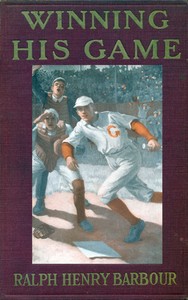
The catalog record for Winning his game — Edition Insights provides practical reading context through 74,103 words, 5 hr 23 min estimated reading time, and 32 detected text sections.
The text analysis averages about 14.9 words per sentence, while the detected sections provide another way to judge how the source is divided.
Project Gutenberg metadata also associates the work with “Friendship -- Juvenile fiction,” connecting these edition facts with the source record’s subject description.
Explore this collection
These alternatives are selected using recorded categories and estimated reading time.
About 328 minutes
Fantasy Juvenile Worlds
75,246 recorded words. 5 minutes difference from this book's estimate.
View Gutenberg source #67184About 318 minutes
Fantasy Juvenile Worlds
72,952 recorded words. 5 minutes difference from this book's estimate.
View Gutenberg source #67397About 314 minutes
Fantasy Juvenile Worlds
72,003 recorded words. 9 minutes difference from this book's estimate.
View Gutenberg source #56834Search stored excerpts and compare books → Choose by your preferences →
Choices use stored catalog measurements. Estimates vary with reading speed. A shared category is a catalog label, not a claim that two books have the same argument or literary quality.
Search reads excerpt text stored with this catalog and links to its associated Gutenberg record. The connection is stored in the site database; this tool does not recheck that every excerpt is word-for-word identical to that external record. Excerpt search does not cover every chapter and does not verify historical publication dates.
Catalog snapshot checked: 2026-09-25. Coverage: 91 public books, 91 available source excerpts.
Read the complete public-domain text at its original source.
Read on Project GutenbergRalph Henry Barbour opens Winning His Game with a scene of physical weariness: Jimmy Logan tramps snow from his shoes, shoves his skis behind a door, and collapses into a chair, his wet mackinaw collar touching his ears. The narrator reports these actions without entering Jimmy’s thoughts, establishing a pattern of external observation that persists throughout the excerpts. Dialogue is clipped and functional—a mere “Hello” and “Ugh!”—and the room’s details (the windowseat, the doubled-up leg) are noted as they appear to an observer. This authorial choice to prioritize visible behavior over internal reflection gives the prose a brisk, reportorial quality, fitting for a story centered on baseball games and school rivalries.
The baseball passages rely on a specialized vocabulary that blends technical terms with colloquial energy. Barbour writes of a “screeching two-base hit,” a batter who “landed on the first offering,” and a pitcher who “went through five innings and been sent to the showers.” The word screeching transfers sound to the page, while offering treats the pitch as a gift the batter accepts or refuses. Such choices root the narration in the sensory world of the game—the crack of the bat, the arc of the ball—without needing to explain rules. The narrator also uses verbs of motion with precision: a runner “ambled over the plate,” a batter “rapped a liner straight into the hands of shortstop.” These are not generic descriptions; they reflect an ear for baseball’s own idiom circa 1917.
Barbour’s narrator rarely reports what characters think or feel. In the opening, Jimmy Logan is “tramping heavily” and “dragging wearied feet,” but the cause of his fatigue is left to inference. Later, when a pinch-hitter “landed on the first offering,” the narrator does not say he was nervous or confident—only that he “turned the laugh on High School’s pitcher.” The closest the excerpts come to interiority is a parenthetical: “Anyone but Jimmy would have suffered from nerves, I fancy.” The I fancy is a rare intrusion, and it speculates about a hypothetical other, not about Jimmy himself. This restraint keeps the focus on observable events—swings, misses, errors—and makes the story feel like a game called by a distant announcer.
The excerpts show that Barbour organizes long stretches of the novel around individual baseball games, treating each inning as a mini-chapter. The account of the Grafton–High School game moves methodically through the lineup: “Bert Winslow, first man up, was passed. Neil Ayer laid a bunt … Mr. Sargent sent Milford to bat.” The narrator names every player who appears, records each outcome (single, error, walk), and notes the inning and score. This structure mirrors a box score, but Barbour enlivens it with verbs like screeched and ambled. The game is not just a sequence of plays; it is a dramatic arc with a turning point (the muff in the third) and a climax (the winning run in the ninth). The challenge and rematch are then summarized in a single paragraph, showing that Barbour can compress time when the game itself is not the focus.
Two details recur across the excerpts: the coach’s active role in substitutions and the luck of the pinch-hitter. Mr. Sargent “took a chance and let Nate go to bat,” then “called him back and Jimmy Logan was sent in.” The coach is a constant presence, making decisions that the narrator reports without judgment. Meanwhile, pinch-hitters often succeed through fortune rather than skill: Gus Weston, “ordinarily something of a joke,” gets a hit; Jimmy Logan “had to do was dodge two wild deliveries and trot, smilingly, to first.” These moments suggest that Barbour values the unpredictable nature of baseball—a weak hitter can become a hero, and a coach’s gamble can pay off. The narrator’s dry tone (“something of a joke”) undercuts any sentimentality, keeping the focus on the game’s inherent uncertainty.
Readers approaching Winning His Game should attend to how Barbour balances the demands of a team sport with the individual moments that decide a contest. The narrator’s external perspective means that character is revealed through action—a swagger, a muff, a lucky dodge—rather than confession. Pay attention to the verbs: they carry the weight of the story. The novel rewards those who read the game sequences as carefully as the players read the pitch.
That rainy afternoon, I lost myself in Barbour’s baseball boys, their swift, uncomplicated contests, and felt a strange ache for that simplicity. After closing it, my hand drifted to an old shelf and pulled down Mopsa the Fairy — Themes and Context, remembering how both worlds, in their different ways, let me forget the clock for a while.
Capture what you thought, learned, and would like to remember.









