About 176 minutes
Young Visitor to Mars — Edition Insights
Science Fiction Utopias
40,450 recorded words. 18 minutes difference from this book's estimate.
View Gutenberg source #60133
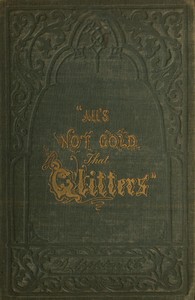
Before opening "All's not Gold that Glitters;" or, The Young Californian — Key Ideas to Explore, the edition data offers a quick orientation: 44,481 words, 3 hr 14 min estimated reading time, and 18 detected text sections.
The text analysis averages about 22.6 words per sentence, while the detected sections provide another way to judge how the source is divided.
Project Gutenberg metadata also associates the work with “Christian life -- Juvenile fiction,” connecting these edition facts with the source record’s subject description.
Explore this collection
These alternatives are selected using recorded categories and estimated reading time.
About 176 minutes
Science Fiction Utopias
40,450 recorded words. 18 minutes difference from this book's estimate.
View Gutenberg source #60133About 235 minutes
Science Fiction Utopias
53,979 recorded words. 41 minutes difference from this book's estimate.
View Gutenberg source #68459About 268 minutes
Science Fiction Utopias
61,535 recorded words. 74 minutes difference from this book's estimate.
View Gutenberg source #63619Search stored excerpts and compare books → Choose by your preferences →
Choices use stored catalog measurements. Estimates vary with reading speed. A shared category is a catalog label, not a claim that two books have the same argument or literary quality.
Search reads excerpt text stored with this catalog and links to its associated Gutenberg record. The connection is stored in the site database; this tool does not recheck that every excerpt is word-for-word identical to that external record. Excerpt search does not cover every chapter and does not verify historical publication dates.
Catalog snapshot checked: 2026-09-25. Coverage: 91 public books, 91 available source excerpts.
Read the complete public-domain text at its original source.
Read on Project GutenbergAlice B. Haven's 1859 novel, published under her pseudonym Cousin Alice, opens with a preface that explicitly frames the story as a moral lesson: the history of King Midas teaches that gold is not happiness, and the title warns that fair promises may deceive. The catalog subjects list Christian life, family relationships, and the California gold discoveries, but the excerpts available here reveal a narrative that spends considerable time on the physical journey—crossing plains, managing oxen, and finding water—rather than on overt religious instruction or domestic scenes.
The preface, addressed to the Home circle, promises a story of trials and adventures, and explicitly states that the lesson of King Midas will be learned. However, the excerpts from the body of the text show little direct moralizing. Chapter IX, “The Plains,” describes in detail the challenges of travel: the oxen toiling, the scarcity of water, and the camp routines. The narrator notes that “if water had been the only liquid that the party carried, it would perhaps have been better for many of them, Mr. Gilman included,” a wry observation that hints at intemperance without preaching. The Christian life subject is thus more a framing device than a constant presence in the action.
The catalog subjects include fathers and sons, mothers and sons, and families. In the excerpts, family relationships are evoked through memory and longing rather than direct interaction. The young hero, Sam, thinks of his mother “a hundred times” as he remembers her “troubled, anxious look.” His father appears in the plains chapter, stretching himself on the grass while Sam cooks. The narrative emphasizes Sam’s internal motivation—not to disappoint his mother—but the actual family dynamics are largely offstage. The novel’s structure, with chapters titled “The Mother and Son” and “The Father and Son,” suggests these relationships become central later, but the available text focuses on Sam’s independence.
The excerpts devote significant attention to the physical environment of California during the gold rush. The plains are described as “an endless reach of level country,” with oaks “dotting the plain like islands.” The journey is marked by practical details: the oxen, the water bottles, the cooking over dry twigs. The narrative slows to describe the “shallow stagnant pool, mantling with green mould” that the oxen refuse to pass. This attention to setting grounds the story in the specific hardships of overland travel, making the gold rush a backdrop for survival rather than a treasure hunt. The catalog subject of California gold discoveries is thus rendered through geography and labor, not through depictions of mining wealth.
Readers approaching this novel for its Christian or family themes may find those elements more explicit in the preface and chapter titles than in the travelogue of the excerpts. The narrative voice is observational, focused on the physical details of the journey. To fully assess how the moral lessons promised in the preface unfold, one would need to read the chapters that directly address the mother-son and father-son relationships, which are not fully represented here.
That rainy afternoon, I kept returning to Young California’s stranded boys, their hunger for home more vivid than any gold. The quiet ache lingered, so I reached for another shelf, where The Rambler Club's motor car — Text and Context sat waiting. Different wheels, same restlessness—young men measuring distance against belonging. The rain never stopped, and neither did that thought.
Capture what you thought, learned, and would like to remember.