About 304 minutes
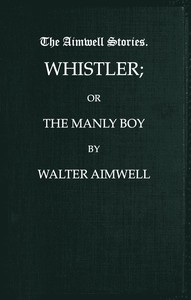
Whistler; or, The Manly Boy — Story, Setting & Ideas
Science Fiction Utopias
69,761 recorded words. 10 minutes difference from this book's estimate.
View Gutenberg source #67723
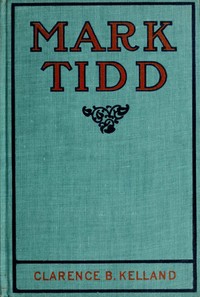
The source record for Mark Tidd: His Adventures and Strategies — Key Ideas to Explore measures this digital text at 67,560 words, 4 hr 54 min estimated reading time, and 22 detected text sections.
The text analysis averages about 15.1 words per sentence, while the detected sections provide another way to judge how the source is divided.
Project Gutenberg metadata also associates the work with “Friendship -- Juvenile fiction,” connecting these edition facts with the source record’s subject description.
Explore this collection
These alternatives are selected using recorded categories and estimated reading time.
About 304 minutes
Science Fiction Utopias
69,761 recorded words. 10 minutes difference from this book's estimate.
View Gutenberg source #67723About 268 minutes
Science Fiction Utopias
61,535 recorded words. 26 minutes difference from this book's estimate.
View Gutenberg source #63619About 322 minutes
Science Fiction Utopias
73,926 recorded words. 28 minutes difference from this book's estimate.
View Gutenberg source #57426Search stored excerpts and compare books → Choose by your preferences →
Choices use stored catalog measurements. Estimates vary with reading speed. A shared category is a catalog label, not a claim that two books have the same argument or literary quality.
Search reads excerpt text stored with this catalog and links to its associated Gutenberg record. The connection is stored in the site database; this tool does not recheck that every excerpt is word-for-word identical to that external record. Excerpt search does not cover every chapter and does not verify historical publication dates.
Catalog snapshot checked: 2026-09-25. Coverage: 91 public books, 91 available source excerpts.
Read the complete public-domain text at its original source.
Read on Project GutenbergThe narrator, James Briggs Martin—called Tallow—introduces himself by explaining how he got his nickname: he once greased his boots with candle tallow and went to school, where the smell drew attention. This anecdote sets the tone for a story told in a colloquial, first-person voice that dwells on small-town details and the boys' everyday lives. The catalog lists the book as Science Fiction & Utopias, but the excerpts contain no futuristic or speculative elements; instead, they show a realistic Michigan setting, an inventor father working in a barn, and a plot revolving around a secret society. The discrepancy suggests the catalog classification may be an error or a very loose interpretation.
Tallow's narration is the book's most distinctive feature. He speaks in a relaxed, conversational style, full of digressions and homely wisdom: “I bet if I could whittle all the time in school I’d stand up at the head of the class. Things don’t puzzle you so.” His voice gives the story a sense of authenticity, as if a real boy were recounting events. The excerpts show him describing characters with vivid, unflattering detail—Batten has “too much under their vests, and a sticky-looking complexion”—and using dialect markers like “a-doin’” and “scairt.” This local color aligns with the catalog subject “Michigan -- Juvenile fiction,” grounding the adventure in a specific, rural American setting.
One catalog subject is “Inventors -- Fiction,” and the excerpts confirm that Mark Tidd’s father is inventing an engine in his barn. However, the invention itself is barely described; it functions more as a background detail than a plot driver. Tallow mentions “the engine Mr. Tidd was inventing out in his barn” in the opening, but the action in the provided text centers on the boys’ schemes against the secret society, not on the engine. The inventor element seems to be a character trait rather than a central theme. Readers expecting a story about invention may find it takes a secondary role to friendship and mischief.
The excerpts depict a sustained episode of trickery against a group of men—Batten, Willis, and Bill—who are part of a secret society. Mark Tidd orchestrates pranks: ringing a bell, having Sammy imitate a panther screech, and tying up a dog. The men react with fear, described in comic, physical terms: “They got white; I could see it way where I was. The color seemed just to pop out of their faces.” The catalog subject “Secret societies -- Juvenile fiction” is thus directly represented, but the society itself is not explained in the excerpts; it appears as a vague threat. The boys’ “strategies” are practical jokes rather than elaborate plans, and the humor comes from the contrast between the boys’ control and the men’s panic.
The excerpts suggest a lighthearted adventure story driven by dialogue and physical comedy, with a strong sense of place. Readers should note that the narrator, Tallow, is not the hero but an observer; Mark Tidd remains somewhat distant, described through Tallow’s admiration. The catalog’s “Science Fiction” label is misleading—this is a realistic, humorous boys’ story. Approach it for its period charm and narrative voice rather than for speculative content.
Reading about Mark Tidd’s pranks, I kept thinking how those boys’ wild schemes felt like a secret language between old friends. There’s a quiet ache in that, a longing for simpler mischief. Land and Sea Tales for Boys and Girls — A Closer Reading carries that same gentle warmth, like sitting on a porch at dusk, remembering adventures that never really leave you.
Use these questions to collect your thoughts before moving on.