About 194 minutes
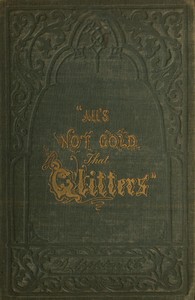
"All's not Gold that Glitters;" or, The Young Californian — Key Ideas to Explore
Science Fiction Utopias
44,481 recorded words. 18 minutes difference from this book's estimate.
View Gutenberg source #67206
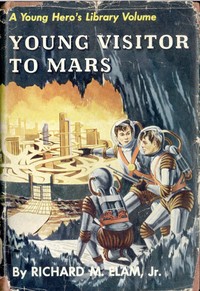
Before opening Young Visitor to Mars — Edition Insights, the edition data offers a quick orientation: 40,450 words, 2 hr 56 min estimated reading time, and 6 detected text sections.
The text analysis averages about 12.3 words per sentence, while the detected sections provide another way to judge how the source is divided.
Project Gutenberg metadata also associates the work with “Science fiction,” connecting these edition facts with the source record’s subject description.
Explore this collection
These alternatives are selected using recorded categories and estimated reading time.
About 194 minutes
Science Fiction Utopias
44,481 recorded words. 18 minutes difference from this book's estimate.
View Gutenberg source #67206About 235 minutes
Science Fiction Utopias
53,979 recorded words. 59 minutes difference from this book's estimate.
View Gutenberg source #68459About 115 minutes
Science Fiction Utopias
26,338 recorded words. 61 minutes difference from this book's estimate.
View Gutenberg source #67098Search stored excerpts and compare books → Choose by your preferences →
Choices use stored catalog measurements. Estimates vary with reading speed. A shared category is a catalog label, not a claim that two books have the same argument or literary quality.
Search reads excerpt text stored with this catalog and links to its associated Gutenberg record. The connection is stored in the site database; this tool does not recheck that every excerpt is word-for-word identical to that external record. Excerpt search does not cover every chapter and does not verify historical publication dates.
Catalog snapshot checked: 2026-09-25. Coverage: 91 public books, 91 available source excerpts.
Read the complete public-domain text at its original source.
Read on Project GutenbergFrom its opening sentence, Young Visitor to Mars establishes a tension between stillness and speed: the rocket ship Shooting Star is described as powering through space “like a silver bullet,” yet the young protagonists, Ted and Jill Kenton, feel as if they are not moving at all. This contrast recurs throughout the novel, as the narrative shifts between the confined interiors of spaceships and habitats and the vast, threatening exterior of space and planetary surfaces. The story’s structure—moving from Earth orbit to a Moon stopover, then to Mars—mirrors the gradual introduction of danger, with each leg of the journey bringing new physical and emotional challenges.
The novel’s chapter titles and plot progression are organized around travel: “Beyond the Earth,” “First Stop—Luna,” “Into Space Again,” “The New World.” Each major transition is marked by a departure or arrival, and the narrative lingers on the mechanics of space flight—air locks, radar, acceleration—as much as on character reactions. This emphasis on movement gives the story a clear, episodic structure that mirrors a journey log. The excerpts show that even within a single location, characters are constantly in motion: they run to boats, jet down waterways, and climb into space suits. The pace of the prose accelerates during crisis sequences, such as the dust storm in Chapter Thirteen, where short sentences and rapid action verbs (“whirled,” “sped,” “jumped”) create a sense of urgency. By contrast, quieter moments—like the opening conversation between Ted and Jill—use longer, more reflective sentences, establishing a rhythm that alternates between tension and relief.
Two opposing images dominate the Martian sections: dust and water. Dust appears as a persistent, abrasive force. Yank the Martian animal is described as having “half the sand of Mars on him,” and the storm in Chapter Thirteen blots out the landscape, forcing the boys to wait. The dust is not merely atmospheric; it physically damages the boat, leaving scratches “like a file.” Water, by contrast, is a medium of movement and connection. The Kentons travel along canals in a boat, and the narrative repeatedly describes jettisoning down waterways, turning into the Main Canal, and speeding toward destinations. The canals are the arteries of Martian civilization, and the boat serves as a vehicle that links domestic spaces (the house) to public ones (the science building). This interplay between the gritty, obscuring dust and the clear, directional flow of water creates a sensory contrast that reinforces the theme of navigating an alien environment.
The excerpts reveal that danger is often filtered through the children’s perceptions. Ted’s initial bravado—“Thousands of miles an hour isn’t much”—is undercut by Jill’s fear of meteors and the dark. As the story progresses, Ted’s confidence is tested: in the dust storm, he must override his hesitation to fetch a doctor for his ill sister. The narrative does not shy away from showing his uncertainty; he is “not keen to venture out” and finds that “the storm still had a lot of fight left in it.” The children are given genuine responsibilities—operating the boat, navigating the canal, communicating with adults—but their limitations are also clear. They cannot simply power through the storm; they must wait for it to subside. This balance between agency and vulnerability is a hallmark of juvenile adventure fiction, and Elam maintains it by keeping the adults present but often offstage, forcing the young characters to act independently within a framework of parental oversight.
Yank, the Martian creature, serves as both comic relief and a barometer of environmental harshness. In the excerpt, he is described as “the most forlorn sight” with dirty, matted fur and bloodshot eyes, and his shower produces “streams of dark-red liquid.” The animal’s plight mirrors the human characters’ struggle against the Martian environment. Yet Yank also provides moments of levity: he eagerly jumps into the shower, and later, in a scene not fully excerpted, he is involved in a dance. His presence introduces a note of domesticity and affection into the otherwise stark setting. The illustrations by Charles Geer, listed in the contents, likely emphasize Yank’s expressive features. The animal’s name—a colloquial term for an American—also hints at a cultural transplant, a familiar creature in an unfamiliar world. Through Yank, the novel offers younger readers a relatable, non-human companion whose reactions to Mars are instinctive rather than intellectual.
Readers approaching Young Visitor to Mars will find a story that moves briskly between set pieces, each introducing a new aspect of interplanetary life. Pay attention to how the author uses physical details—the feel of sand, the sound of wind, the sight of stars emerging after a storm—to ground the science fiction in sensory experience. The novel’s structure rewards those who track the journey’s stages, as each leg builds on the last, and the recurring images of dust and water create a cohesive world that feels both alien and lived-in.
Reading again how Elam’s boy carries dust and water between worlds, I found myself remembering an older, earthbound story—a young Californian chasing glitter that proves fool’s gold. Both children learn to weigh what they carry. There’s a quiet ache in that: how striving looks so bright from afar, yet settles into something humbler up close. It lingers like "All's not Gold that Glitters;" or, The Young Californian — Key Ideas to Explore, a slow echo of the same lesson.
Save your reaction, strongest insight, and memorable passage.