About 294 minutes
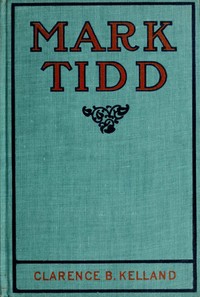
Mark Tidd: His Adventures and Strategies — Key Ideas to Explore
Science Fiction Utopias
67,560 recorded words. 10 minutes difference from this book's estimate.
View Gutenberg source #57165
Whistler; or, The Manly Boy — Story, Setting & Ideas can be approached with a clearer sense of reading commitment from its source measurements: 69,761 words, 5 hr 4 min estimated reading time, and 24 detected text sections.
The text analysis averages about 18.6 words per sentence, while the detected sections provide another way to judge how the source is divided.
Project Gutenberg metadata also associates the work with “Nature stories,” connecting these edition facts with the source record’s subject description.
Explore this collection
These alternatives are selected using recorded categories and estimated reading time.
About 294 minutes
Science Fiction Utopias
67,560 recorded words. 10 minutes difference from this book's estimate.
View Gutenberg source #57165About 322 minutes
Science Fiction Utopias
73,926 recorded words. 18 minutes difference from this book's estimate.
View Gutenberg source #57426About 268 minutes
Science Fiction Utopias
61,535 recorded words. 36 minutes difference from this book's estimate.
View Gutenberg source #63619Search stored excerpts and compare books → Choose by your preferences →
Choices use stored catalog measurements. Estimates vary with reading speed. A shared category is a catalog label, not a claim that two books have the same argument or literary quality.
Search reads excerpt text stored with this catalog and links to its associated Gutenberg record. The connection is stored in the site database; this tool does not recheck that every excerpt is word-for-word identical to that external record. Excerpt search does not cover every chapter and does not verify historical publication dates.
Catalog snapshot checked: 2026-09-25. Coverage: 91 public books, 91 available source excerpts.
Read the complete public-domain text at its original source.
Read on Project GutenbergWalter Aimwell's Whistler; or, The Manly Boy opens with a scene that immediately establishes its central tension: the contrast between genuine character and performed sophistication. The protagonist, Whistler, earns his nickname through a habitual whistling that marks him as natural and unpretentious. In an early conversation, Whistler's father satirizes city manners by advising a country cousin to avoid looking at anything or showing surprise—rules that would make sight-seeing impossible. This exchange, with its playful yet pointed critique of urban affectation, sets the stage for a story that consistently values authenticity over artificial polish.
The preface states the book's explicit aim: to portray the character of the "MANLY BOY" as one that inspires love and esteem when natural and genuine. This is not a generic call to virtue but a specific argument that boyishness and manliness can coexist. The narrative demonstrates this through Whistler's actions and dialogue, which are neither priggish nor reckless. For instance, when his father jokes about cows chasing him, Whistler replies with dry wit: "No, sir, they didn't chase me; but I suppose it was because feed was uncommonly good." This response shows a boy who is both respectful and clever, embodying the manliness Aimwell advocates—rooted in everyday behavior rather than heroic deeds.
A long, carefully constructed scene in the excerpt contrasts city and country values through the lens of a visit to Boston. Whistler's father recounts his own "grass-green" days, when he stared at everything and was rebuked by his city-bred brother. He defiantly declares green his "favorite color" and that he would "glory in it." This anecdote frames curiosity as a virtue and city pretense as ridiculous. The lesson is reinforced when young Ettie, misunderstanding the joke, asks if cows eat boys—a moment that exposes the absurdity of judging country innocence. The father's twofold object in telling this story is to prevent Whistler from being impatient with his cousin's wonder and to affirm that seeing the sights matters more than appearing sophisticated.
The title itself points to a recurring motif: Whistler's name derives from his habit of whistling, a detail that signals his open, unguarded nature. The text also uses nicknames and labels as shorthand for character—"the Manly Boy" is not a description but a category the story tests. Other patterns include the use of animals (cows, dogs) as foils for human behavior, and the repeated emphasis on "natural" versus "artificial" conduct. The father's advice about not staring is undercut by his own story of being proudly green, creating a pattern where rules are given only to be questioned. These structural choices reinforce the book's moral without resorting to direct preaching.
Readers approaching Whistler; or, The Manly Boy will find a story that rewards attention to its small, deliberate moments—the jokes, the nicknames, the family conversations that carry the weight of the book's moral argument. Aimwell builds his case for manliness not through dramatic incidents but through the texture of daily life, where a boy's response to a cow or a cousin's stare reveals his character. The novel invites a patient reading that savors these quiet lessons.
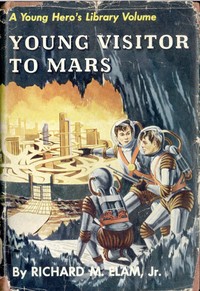
There’s a certain patience in Aimwell’s Whistler, the way he learns by watching rather than rushing. I found myself thinking of that quiet old-fashioned pacing while browsing the Young Visitor to Mars — Edition Insights; both feel like gentle studies of how a boy adjusts to an unfamiliar world. It made me miss that slower kind of attention, honestly.
Capture what you thought, learned, and would like to remember.