About 185 minutes
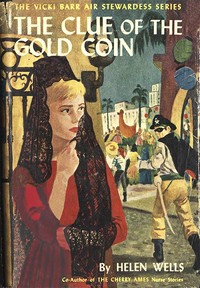
The Clue of the Gold Coin — A Closer Reading
Historical Psychological Social Fiction
42,362 recorded words. 88 minutes difference from this book's estimate.
View Gutenberg source #57100
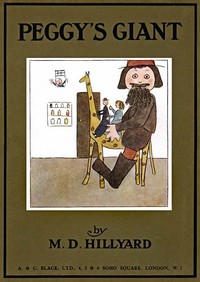
The source record for Peggy's Giant — Background and Themes measures this digital text at 22,255 words, 1 hr 37 min estimated reading time, and 15 detected text sections.
The text analysis averages about 15.2 words per sentence, while the detected sections provide another way to judge how the source is divided.
Project Gutenberg metadata also associates the work with “Picture books for children,” connecting these edition facts with the source record’s subject description.
Explore this collection
These alternatives are selected using recorded categories and estimated reading time.
About 185 minutes
Historical Psychological Social Fiction
42,362 recorded words. 88 minutes difference from this book's estimate.
View Gutenberg source #57100About 191 minutes
Historical Psychological Social Fiction
43,784 recorded words. 94 minutes difference from this book's estimate.
View Gutenberg source #57173About 270 minutes
Historical Psychological Social Fiction
61,933 recorded words. 173 minutes difference from this book's estimate.
View Gutenberg source #66806Search stored excerpts and compare books → Choose by your preferences →
Choices use stored catalog measurements. Estimates vary with reading speed. A shared category is a catalog label, not a claim that two books have the same argument or literary quality.
Search reads excerpt text stored with this catalog and links to its associated Gutenberg record. The connection is stored in the site database; this tool does not recheck that every excerpt is word-for-word identical to that external record. Excerpt search does not cover every chapter and does not verify historical publication dates.
Catalog snapshot checked: 2026-09-25. Coverage: 91 public books, 91 available source excerpts.
Read the complete public-domain text at its original source.
Read on Project GutenbergPeggy's Giant opens not with a story but with a drawing: Peggy's own illustration of the 'First Adventure of the Ring,' complete with a dropped frock, broken cup, and currant dots. The author, M. D. Hillyard, immediately establishes that this is a book where the child protagonist is also the illustrator, and where the visual and verbal narratives intertwine. The frontispiece caption explains that Peggy drew the frock 'very carefully, spreading it out flat on the floor to get it exactly right,' while Mother helped with the Giant's knee. This collaborative, metafictional framing sets the tone for a story that is as much about the act of imagining as it is about the adventures themselves.
The excerpts reveal a narrator attentive to the specifics of a child's world. Peggy's birthday tea is described not as a generic celebration but as a letdown: the only children who could come 'had suddenly started whooping-cough,' and the candles on the sponge cake are 'doing their very best to look brighter than the sunshine.' The text lingers on sensory and material details—the rattle of a cracker, the 'brown holland frock,' the 'black dots' of currants. Even the Giant's fear of the Mayor is rooted in a specific, absurd memory: 'I remember in 1615, or thereabouts—but that will keep till another time.' These concrete touches ground the fantasy in a recognizable, tactile reality.
A striking pattern in the excerpts is the inversion of expected roles: the Giant is consistently terrified, while Peggy remains calm and assertive. When the car gets stuck on the Town Hall spire, the Giant 'practically stood on his head in his efforts to wriggle part of his face under the seat,' and later 'was shaking with fright, and trying to hide himself.' Peggy, by contrast, tells him, 'Don't look such a big frightened baby!' and handles the Mayor with firm coaxing. The Mayor himself is initially blustering but quickly becomes indecisive, climbing onto the Giant's boot only when the crowd turns on him. This dynamic—a small girl managing a giant and a mayor—suggests a playful commentary on authority and fear.
The ring is the engine of the plot, but its workings are deliberately unpredictable. Peggy uses a wish to free the car—'I wish we could go on!'—and the car 'shook itself all over, then leapt upwards, and once more set off at breakneck speed, but this time straight upwards into the sky!' The wishes do not always produce the expected result, and Peggy grows 'very wary' about using them. The ring's power is not explained; it simply is. This lack of systemization keeps the adventures spontaneous and slightly chaotic, mirroring the logic of a child's game where rules are invented on the spot. The illustrations, too, are part of this improvisational spirit: Peggy notes that 'none of the crowd had on red jackets really, but Peggy thought they looked pretty in a picture.'
Readers should approach Peggy's Giant as a collaborative artifact: the text is punctuated by Peggy's own commentary on her drawings, which sometimes correct or supplement the narrative. The story does not build toward a conventional climax but rather accumulates episodes, each introduced by a wish. Pay attention to the moments when the narrator steps back to let Peggy's voice through—these asides reveal the book's interest in the creative process itself, and in the gap between what is imagined and what is drawn.
I keep thinking about how Peggy’s drawings catch the giant’s shyness, that quiet way fear hides inside power. It reminded me of an old story where defeat feels less like falling and more like a door left open. There’s a gentle honesty in both, a softness around being small. Frank Merriwell's Setback; Or, True Pluck Welcomes Defeat — Text and Context stayed with me that way, like a warm hand on my shoulder.
Save your reaction, strongest insight, and memorable passage.