About 340 minutes
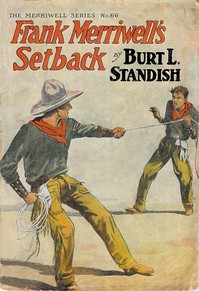
Frank Merriwell's Setback; Or, True Pluck Welcomes Defeat — Text and Context
Historical Psychological Social Fiction
78,103 recorded words. 45 minutes difference from this book's estimate.
View Gutenberg source #62829
Before opening A Little Girl in Old Chicago — Reading Notes, the edition data offers a quick orientation: 88,548 words, 6 hr 25 min estimated reading time, and 23 detected text sections.
The text analysis averages about 13.7 words per sentence, while the detected sections provide another way to judge how the source is divided.
Project Gutenberg metadata also associates the work with “Bildungsromans,” connecting these edition facts with the source record’s subject description.
Explore this collection
These alternatives are selected using recorded categories and estimated reading time.
About 340 minutes
Historical Psychological Social Fiction
78,103 recorded words. 45 minutes difference from this book's estimate.
View Gutenberg source #62829About 298 minutes
Historical Psychological Social Fiction
68,514 recorded words. 87 minutes difference from this book's estimate.
View Gutenberg source #69132About 297 minutes
Historical Psychological Social Fiction
68,126 recorded words. 88 minutes difference from this book's estimate.
View Gutenberg source #57362Search stored excerpts and compare books → Choose by your preferences →
Choices use stored catalog measurements. Estimates vary with reading speed. A shared category is a catalog label, not a claim that two books have the same argument or literary quality.
Search reads excerpt text stored with this catalog and links to its associated Gutenberg record. The connection is stored in the site database; this tool does not recheck that every excerpt is word-for-word identical to that external record. Excerpt search does not cover every chapter and does not verify historical publication dates.
Catalog snapshot checked: 2026-09-25. Coverage: 91 public books, 91 available source excerpts.
Read the complete public-domain text at its original source.
Read on Project GutenbergThe novel opens with a striking narrative choice: Norman Hayne, an older man, recalls his first sight of the Little Girl from a memory softened by years. This framing device immediately establishes a retrospective, almost elegiac tone. The description of the September evening—the lake's iridescent hues, the muddy river shimmering in a glorified light—grounds the story in a specific, sensory landscape. Douglas's prose lingers on domestic objects: a rude porch, a bench with a dishpan, a carved high-post bedstead with faded silk curtains. These details do more than set a scene; they signal a world where material circumstances carry social meaning, where a silver cream jug can betoken former grandeur.
Douglas entrusts the telling to Norman Hayne, a choice that filters the Little Girl's story through a male perspective. The opening paragraph explicitly frames the narrative as an act of memory: 'the time I first saw the Little Girl is one of the pictures that line the halls of remembrance.' This retrospective voice allows Douglas to comment on change—both personal and historical. Norman notes improvements in the town, the decline of 'provincialisms, elisions, and what father had called outlandish talking.' His observations about language are precise: Ben corrects his mother's speech, and she retorts about 'French airs.' The narrator's own boyhood nickname, 'Norme,' surfaces in a letter, a small but telling detail that anchors him in a shared past. By using a male narrator, Douglas gains a vantage point that can move between domestic interiors and public developments, between the kitchen and the wider world of commerce and travel.
Dialogue in the excerpts does more than advance plot; it maps social standing and aspiration. The mother who protests that 'her talk was plenty good enough for her' reveals a resistance to refinement that is itself a class marker. Meanwhile, the narrator notes that 'families coming from different States had brought in accents, pronunciations and adages,' and that these were 'being toned down and refined.' This is not merely background color—it is a central tension in a frontier town striving toward respectability. The old woman with her 'false front of faded black' and her stick that 'kept away curious children' speaks in a voice that belongs to an earlier, rougher era. Even the transcriber's note, which preserves variant spellings like 'vandue' and 'vendue,' 'Cahoky' and 'Cahooky,' underscores the fluidity of language in this setting. Douglas uses these linguistic details to create a world where how one speaks is as telling as what one says.
The excerpts repeatedly return to the work of women's hands. Jolette 'made fine butter' and eggs found a ready sale; the narrator's mother 'would preside' over a pile of dishes. A woman recalls being 'married when I was sixteen and did my washing and scrubbing and cooking,' and she contrasts her own large, strong hands with the narrator's 'slim and small' ones. This moment is not merely descriptive—it carries a judgment about class and the division of labor. The narrator reflects that 'we had not begun to cultivate points of aristocracy in that early period,' yet the comparison of hands suggests that such distinctions are already present. Douglas embeds social commentary in the physical details of daily life: the butter churn, the washboard, the dishpan. These objects are not props but evidence of a system in which women's work is both essential and devalued, a theme that runs beneath the surface of the coming-of-age story.
Despite the title, the excerpts offer remarkably little direct description of Chicago itself. The city appears mainly through its effects: the muddy river, the vessels coming and going across the lake, the 'great improvement in the town.' The narrator's father is 'buying up a bit of property or acres of prairie land,' a hint of the speculation that would transform the region. But the physical city—its streets, buildings, crowds—remains largely offstage. Instead, Douglas focuses on the interior spaces of homes and the natural landscape of lake and prairie. This absence is itself a choice. By keeping Chicago at a distance, the novel emphasizes the domestic and personal over the civic and historical. The city is a force that shapes lives without ever becoming a character. Readers expecting a panoramic urban portrait will find instead a story of rooms, fields, and the slow passage of time.
Readers should attend to the gaps in the excerpts: the Little Girl herself appears only in the title and the narrator's framing memory. Her perspective, her voice, her interior life remain largely hidden behind Norman's recollections. This asymmetry is not a flaw but a deliberate structural choice. The novel asks us to consider how stories about women are told, by whom, and for what purpose. As you read, notice who speaks and who is spoken about, whose hands are described and whose are not. The answers may lie less in the plot than in the texture of the prose.
There’s something in how that little girl’s world grows quietly—her speech, her manners, her own noticing—that reminds me of another slow unfolding, where a young man’s heart keeps catching up to what his eyes already see. I thought of The Charterhouse of Parma, Volume 2 — A Closer Reading the same way, like a room you leave but keep standing in, softly lit and still warm.
Build a private reading journal entry for this title.