About 191 minutes
A Yankee Girl at Shiloh — Story, Setting & Ideas
Historical Psychological Social Fiction
43,784 recorded words. 6 minutes difference from this book's estimate.
View Gutenberg source #57173
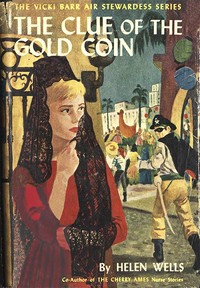
This digital edition of The Clue of the Gold Coin — A Closer Reading is described by source-level measurements including 42,362 words, 3 hr 5 min estimated reading time, and 19 detected text sections.
The text analysis averages about 13.3 words per sentence, while the detected sections provide another way to judge how the source is divided.
Project Gutenberg metadata also associates the work with “Mystery and detective stories,” connecting these edition facts with the source record’s subject description.
Explore this collection
These alternatives are selected using recorded categories and estimated reading time.
About 191 minutes
Historical Psychological Social Fiction
43,784 recorded words. 6 minutes difference from this book's estimate.
View Gutenberg source #57173About 270 minutes
Historical Psychological Social Fiction
61,933 recorded words. 85 minutes difference from this book's estimate.
View Gutenberg source #66806About 271 minutes
Historical Psychological Social Fiction
62,220 recorded words. 86 minutes difference from this book's estimate.
View Gutenberg source #61208Search stored excerpts and compare books → Choose by your preferences →
Choices use stored catalog measurements. Estimates vary with reading speed. A shared category is a catalog label, not a claim that two books have the same argument or literary quality.
Search reads excerpt text stored with this catalog and links to its associated Gutenberg record. The connection is stored in the site database; this tool does not recheck that every excerpt is word-for-word identical to that external record. Excerpt search does not cover every chapter and does not verify historical publication dates.
Catalog snapshot checked: 2026-09-25. Coverage: 91 public books, 91 available source excerpts.
Read the complete public-domain text at its original source.
Read on Project GutenbergThe novel opens with a vivid contrast between a snowstorm at New York's Idlewild Airport and the promise of sunny Florida, establishing Vicki Barr as a stewardess who wishes on stars and gets her desired Tampa assignment. The narrative voice is brisk and conversational, with dialogue that reveals character through banter among the stewardesses. Wells uses specific details—like the Gasparilla Pirate Festival and Ybor City—to ground the story in a real setting, while the pacing shifts from lighthearted travelogue to tense mystery as Vicki observes an old man's peculiar behavior on her flight.
Wells builds Vicki Barr's personality through her speech patterns and interactions. When Vicki says her laugh "tinkled like Chinese chimes stirred by a gentle breeze," the simile is a rare moment of ornate description; more often, her dialogue is direct and playful, as when she teases Sue about wishing on stars. The stewardesses' chatter—"B-r-r-r-r! And I do mean B-r-r-r!"—uses repetition and onomatopoeia to convey camaraderie and a light tone. In contrast, FBI agent Mr. Quayle speaks in measured, professional sentences, with phrases like "I certainly agree that Mr. Duke's proposal to him was a most unusual one." This contrast in voices underscores the shift from Vicki's casual world to the seriousness of the investigation.
The narrative pace accelerates as Vicki collects clues. Early chapters move slowly, with descriptive passages about the airport and the stewardesses' assignments. Once Vicki notices the old man, Mr. Tytell, the pacing tightens: she recalls his behavior, finds a travel folder, and decides to visit Ybor City. Wells controls tempo by alternating Vicki's internal reasoning with action. For example, Vicki "leaned forward in her seat" and changes her destination to the airport, a small physical action that signals a decision. Later, during her report to Mr. Quayle, the pace slows again as she recounts events in detail, allowing the reader to piece together the mystery alongside the FBI agent.
Wells plants specific details that gain significance through repetition. The Granada Restaurant in Ybor City appears first on a travel folder left by Mr. Tytell, then in a conversation Vicki overhears between Raymond Duke and Joey Watson, and finally as the location where Vicki finds Mr. Tytell working. This recurrence transforms a casual mention into a clue. Similarly, the gold coin of the title is hinted at through the pirate festival and Duke's import-export business, which includes "laces, perfumes, antiques, and other luxury items." The FBI agent's pipe—"an old smoke-blackened briar pipe"—is a minor but consistent prop that grounds his character. These details reward attentive reading without overwhelming the plot.
Readers should pay attention to how Wells uses setting—from the snowy airport to the festive streets of Tampa—as more than backdrop; each location introduces new characters and complications. The narrative voice remains consistently aligned with Vicki's perspective, so her uncertainties become the reader's. The excerpts suggest a mystery that unfolds through observation and conversation rather than action, making the gold coin clue a promise of deeper intrigue.
Rereading The Clue of the Gold Coin, I felt that same quiet pull I always get with Vicki—her steadiness among strangers, her way of noticing without forcing. It reminded me of an old companion, Betty Wales on the campus — Background and Themes. Both girls walk into unfamiliar rooms, carrying only their own gentle watchfulness, and somehow, that’s enough.
Capture what you thought, learned, and would like to remember.