About 298 minutes
Betty Wales on the campus — Background and Themes
Historical Psychological Social Fiction
68,514 recorded words. 42 minutes difference from this book's estimate.
View Gutenberg source #69132
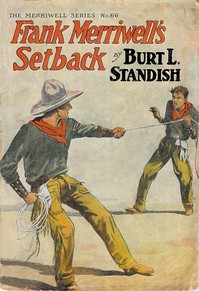
Frank Merriwell's Setback; Or, True Pluck Welcomes Defeat — Text and Context can be approached with a clearer sense of reading commitment from its source measurements: 78,103 words, 5 hr 40 min estimated reading time, and 34 detected text sections.
The text analysis averages about 14.5 words per sentence, while the detected sections provide another way to judge how the source is divided.
Project Gutenberg metadata also associates the work with “Love stories,” connecting these edition facts with the source record’s subject description.
Explore this collection
These alternatives are selected using recorded categories and estimated reading time.
About 298 minutes
Historical Psychological Social Fiction
68,514 recorded words. 42 minutes difference from this book's estimate.
View Gutenberg source #69132About 297 minutes
Historical Psychological Social Fiction
68,126 recorded words. 43 minutes difference from this book's estimate.
View Gutenberg source #57362About 385 minutes
Historical Psychological Social Fiction
88,548 recorded words. 45 minutes difference from this book's estimate.
View Gutenberg source #58410Search stored excerpts and compare books → Choose by your preferences →
Choices use stored catalog measurements. Estimates vary with reading speed. A shared category is a catalog label, not a claim that two books have the same argument or literary quality.
Search reads excerpt text stored with this catalog and links to its associated Gutenberg record. The connection is stored in the site database; this tool does not recheck that every excerpt is word-for-word identical to that external record. Excerpt search does not cover every chapter and does not verify historical publication dates.
Catalog snapshot checked: 2026-09-25. Coverage: 91 public books, 91 available source excerpts.
Read the complete public-domain text at its original source.
Read on Project GutenbergThe story opens with Frank Merriwell pressing Dade Morgan for the reason behind his unexplained hostility. Morgan admits he was an enemy before ever seeing Frank, trained to hate by his uncle—a man Frank’s father allegedly ruined. This confession, extracted during a private conversation, sets up a central conflict rooted in past grievances rather than immediate campus slights.
Throughout the excerpts, the narrative alternates between dialogue-heavy confrontations and descriptions of hockey games, where physical action mirrors moral struggles. The recurring image of a watch being consulted underscores Frank’s methodical approach to justice, while Morgan’s evasions highlight the tension between appearance and truth.
The scene between Frank and Dade Morgan is structured around withheld information and deliberate pauses. Frank consults his watch twice, signaling that he controls the pace of the interrogation. Morgan’s initial refusal to answer is met with a threat of expulsion, forcing him to reveal his uncle’s imprisonment. This exchange relies on a pattern of question, evasion, and ultimatum, creating a rhythm that emphasizes power dynamics.
Frank’s language is precise: he notes that Morgan’s enmity was “full grown at the start, and without apparent reason.” The dialogue avoids melodrama, instead using legalistic phrasing like “confession and avoidance” to frame the revelation. The setting—a private room—contrasts with the public spaces of Yale, suggesting that true motives are hidden from the campus community.
The catalog lists hockey among the story’s subjects, and the excerpts hint at athletic contests that parallel personal conflicts. While the provided text does not include full game descriptions, the series’ pattern suggests that sports serve as arenas where moral qualities are tested. Frank’s reputation as a skilled athlete is implied by his leadership, and Morgan’s athletic success as a freshman is noted as a source of his influence.
Movement between scenes—from private talks to public games—creates a structural contrast. The hockey rink becomes a space where physical prowess and teamwork are displayed, but the excerpts focus more on off-ice tensions. Readers familiar with the series will recognize that setbacks in sports often mirror setbacks in personal relationships, reinforcing the title’s theme of facing defeat with resilience.
Morgan’s motive is economic: his uncle lost a fortune due to Frank’s father, leaving Morgan dependent on borrowed money for his Yale education. The words “beggarly pittance,” “borrowed,” and “heir” recur, framing the conflict as a struggle over legacy. Frank’s father is described as pursuing the uncle “nearly over the world,” suggesting a long-standing vendetta that now falls to the next generation.
This financial subtext adds weight to the personal enmity. Morgan’s hatred is not spontaneous but cultivated, and his uncle’s losses—including the Ragged Queen Mine—are presented as concrete grievances. The narrative thus ties emotional hostility to material deprivation, a detail that distinguishes this installment from simpler campus rivalries.
Frank’s approach to justice is methodical: he gathers proofs, offers Morgan a chance to explain, and weighs the consequences. His statement that he has “a good many things to attend to” suggests a busy schedule, but he still takes time to hear Morgan out. This reflects a broader narrative structure where actions have consequences, and characters are held accountable for their choices.
The excerpts show Frank acknowledging Morgan’s abilities—calling him “capable” and “admirable” in some respects—before deciding whether to expose him. This balanced assessment avoids simple villainy, instead presenting Morgan as a figure whose potential is misdirected. The story’s title, True Pluck Welcomes Defeat, hints that setbacks may lead to growth, though the excerpts do not reveal the outcome of this particular conflict.
Readers approaching this installment should pay attention to how private conversations and public events echo each other. The dialogue carries much of the plot’s weight, while the hockey sequences likely provide contrast through action. The family feud introduced here may resonate across the series, but within this volume, the focus remains on Frank’s attempt to understand an enemy shaped by forces beyond the Yale campus.
I keep thinking about how Frank’s quiet persistence against a hatred he never started feels so much like Betty’s own steady footing on unfamiliar ground. That old ache of carrying someone else’s grudge—it stays with you. The same warmth lingers here, somehow, in Betty Wales on the campus — Background and Themes, like a shared secret between old friends.
Use these questions to collect your thoughts before moving on.