About 298 minutes
Betty Wales on the campus — Background and Themes
Historical Psychological Social Fiction
68,514 recorded words. 1 minutes difference from this book's estimate.
View Gutenberg source #69132
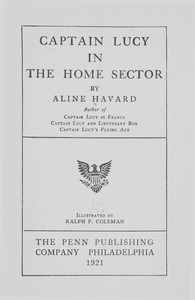
Before opening Captain Lucy in the Home Sector — A Reader’s Guide, the edition data offers a quick orientation: 68,126 words, 4 hr 57 min estimated reading time, and 18 detected text sections.
The text analysis averages about 14.7 words per sentence, while the detected sections provide another way to judge how the source is divided.
Project Gutenberg metadata also associates the work with “War stories,” connecting these edition facts with the source record’s subject description.
Explore this collection
These alternatives are selected using recorded categories and estimated reading time.
About 298 minutes
Historical Psychological Social Fiction
68,514 recorded words. 1 minutes difference from this book's estimate.
View Gutenberg source #69132About 290 minutes
Historical Psychological Social Fiction
66,498 recorded words. 7 minutes difference from this book's estimate.
View Gutenberg source #61673About 271 minutes
Historical Psychological Social Fiction
62,220 recorded words. 26 minutes difference from this book's estimate.
View Gutenberg source #61208Search stored excerpts and compare books → Choose by your preferences →
Choices use stored catalog measurements. Estimates vary with reading speed. A shared category is a catalog label, not a claim that two books have the same argument or literary quality.
Search reads excerpt text stored with this catalog and links to its associated Gutenberg record. The connection is stored in the site database; this tool does not recheck that every excerpt is word-for-word identical to that external record. Excerpt search does not cover every chapter and does not verify historical publication dates.
Catalog snapshot checked: 2026-09-25. Coverage: 91 public books, 91 available source excerpts.
Read the complete public-domain text at its original source.
Read on Project GutenbergAline Havard opens Captain Lucy in the Home Sector with a pointed irony: Larry Eaton dubs the American occupation of Coblenz “the Home Sector,” a phrase that undercuts the cheerfulness of the Stars and Stripes flying over German headquarters. The December sunlight on the Rhine and Lucy’s “sober face” immediately establish a contrast between official optimism and personal unease. Havard’s narrative voice, through the introduction, admits that Lucy—like many—found the armistice did not end her work. This editorial note focuses on the authorial choices in diction, dialogue, and description that shape the story’s atmosphere and character dynamics.
Havard uses dialogue to layer meaning beneath surface cheer. Larry’s label “Home Sector” carries a wry acknowledgment that occupation duty is far from home. When Lucy later tends to the ill Adelheid, the child’s feverish ramblings reveal a secret errand: “I’ll tell him you will go to the river without fail.” Franz’s harsh command “Be silent, Adelheid!” and his “odd look at Lucy, in which hostility at her presence contended with a kind of gratitude” show how dialogue exposes hidden tensions. Havard avoids explicit exposition, letting characters’ words imply espionage, fear, and divided loyalties.
Havard’s descriptions ground the narrative in physical detail. The cottage scene is built from sensory cues: “red embers glowed on the hearth,” “draughts from between the logs made the candle-flame veer,” and “pine-boughs sent quick flames darting up the chimney.” The forest approach is marked by “owls hooted dismally overhead and invisible beasts scurried off into the shadows.” These details create a palpable atmosphere of cold, poverty, and unease. The contrast between the pale December sunlight on the Rhine and the dim, drafty cottage underscores the gap between the occupiers’ perspective and the locals’ hardship.
Havard reveals character through small actions rather than interior monologue. Lucy’s nursing is precise: she “felt Adelheid’s quick pulse and touched her swollen tonsils,” then administers quinine, iodine, a compress, and a hot water bottle. Franz “moved about the room, silent and inscrutable as ever,” while Trudchen “ran where Lucy bade her, or else knelt by Adelheid’s little bed.” These gestures define roles—Lucy as competent caregiver, Franz as brooding and secretive, Trudchen as anxious and submissive. The author avoids telling us their emotions; instead, the physical movements convey fear, gratitude, and suspicion.
Havard’s introduction uses a first-person plural “we” to align the narrator with the reader’s own postwar experience: “like lots of us, she found that there was a great deal left to do.” This creates a sense of shared historical moment. The chapter titles—such as “The Mystery of the Forest” and “Unknown to History”—signal genre conventions of mystery and adventure, yet the prose itself is restrained, focusing on daily tasks and quiet observation. The narrative voice maintains a measured tone, even in dramatic moments, which heightens the tension between the ordinary and the ominous.
Readers attentive to Havard’s craft will notice how she builds suspense through understatement and physical detail rather than melodrama. The story’s power lies in what is left unsaid—the silences between characters, the half-revealed secrets. Pay close attention to the way objects (a candle, a blanket, a beer bottle) carry emotional weight, and how dialogue often conceals more than it reveals. This approach rewards careful reading and offers a nuanced portrait of a young woman navigating the ambiguities of occupation and peace.
There’s a quiet ache in Captain Lucy in the Home Sector — the way duty lingers even as the longing for home grows sharper. It reminds me, somehow, of the quieter corners of Betty Wales on the campus — Background and Themes, where belonging is never quite simple. Both feel like letters from another time, folded carefully.
Save your reaction, strongest insight, and memorable passage.