About 297 minutes
Captain Lucy in the Home Sector — A Reader’s Guide
Historical Psychological Social Fiction
68,126 recorded words. 7 minutes difference from this book's estimate.
View Gutenberg source #57362
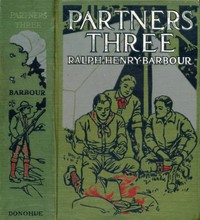
Partners Three — Reading Notes can be approached with a clearer sense of reading commitment from its source measurements: 66,498 words, 4 hr 50 min estimated reading time, and 28 detected text sections.
The text analysis averages about 13.3 words per sentence, while the detected sections provide another way to judge how the source is divided.
Project Gutenberg metadata also associates the work with “Teenage boys -- Juvenile fiction,” connecting these edition facts with the source record’s subject description.
Explore this collection
These alternatives are selected using recorded categories and estimated reading time.
About 297 minutes
Historical Psychological Social Fiction
68,126 recorded words. 7 minutes difference from this book's estimate.
View Gutenberg source #57362About 298 minutes
Historical Psychological Social Fiction
68,514 recorded words. 8 minutes difference from this book's estimate.
View Gutenberg source #69132About 271 minutes
Historical Psychological Social Fiction
62,220 recorded words. 19 minutes difference from this book's estimate.
View Gutenberg source #61208Search stored excerpts and compare books → Choose by your preferences →
Choices use stored catalog measurements. Estimates vary with reading speed. A shared category is a catalog label, not a claim that two books have the same argument or literary quality.
Search reads excerpt text stored with this catalog and links to its associated Gutenberg record. The connection is stored in the site database; this tool does not recheck that every excerpt is word-for-word identical to that external record. Excerpt search does not cover every chapter and does not verify historical publication dates.
Catalog snapshot checked: 2026-09-25. Coverage: 91 public books, 91 available source excerpts.
Read the complete public-domain text at its original source.
Read on Project GutenbergThe Crystal Spring, a snub-nosed, square-sterned boat that “sat low in the water and moved sluggishly,” introduces a story more concerned with the texture of its setting than with swift adventure. The opening chapter devotes careful detail to the vessel’s patched mainsail, rusty pump, and gray deck—a deliberate, almost technical description that establishes a tone of practical realism. The three partners, Jack, Hal, and Bee, are not immediately plunged into treasure hunting; instead, they are shown managing a boat, discussing gull eggs, and building a signal fire. The catalog subjects list camping, treasure, and boating, but the excerpts reveal that the boys spend much of their time dealing with hunger, marooning, and the mechanics of survival.
The Crystal Spring is described with an engineer’s eye: “snub-nosed and square-sterned and wide in the beam,” with a mast stepped well forward and a jibsail seldom used. The narrator notes the two-inch hose coiled over a hatch, attached to a rusty pump. This level of mechanical detail is unusual for a juvenile adventure and suggests that the boat itself is a character. Jack, the skipper, is introduced not through heroic action but through his posture—“one arm draped over the long tiller”—and his inability to whistle a tune. The boat’s shortcomings (slow, ugly, needing paint) are listed without apology, grounding the story in a world where equipment is imperfect and must be managed.
When the boys are marooned on Hog Island, the narrative shifts to immediate physical needs. Bee’s wish for “a large, juicy sirloin steak” is met with practical suggestions: gull eggs, mussels, fishing. Jack notes that gulls lay eggs earlier in the season, and Bee recalls they stowed fishing lines in the “stern closet.” The dialogue is natural and unforced, revealing character through problem-solving. The signal fire is built and replenished, and the boys sleep side by side for warmth. The scene is less about treasure than about making do with limited resources—a recurring pattern that the catalog’s “treasure troves” subject only partially captures.
The three boys are distinguished by their speech. Jack is the practical leader, offering calm assessments (“Mussels will do”). Hal is more impulsive, asking “Where’s Jack?” upon waking. Bee is the comic relief, sighing dolefully and suggesting they “go to sleep” to forget hunger. Their banter—“The ‘stern closet’ is good, Bee”—shows a comfortable friendship. The narrator’s voice is similarly understated, noting that Jack was “whistling—I almost said a tune” and then letting the joke stand. This light, observational tone carries the story without melodrama, even when the boys are stranded.
Readers expecting a straightforward treasure hunt will find instead a story that lingers on the details of sailing, camping, and conversation. The treasure plot appears in chapter titles but is not the dominant force in the excerpts; the boys’ immediate struggles with hunger, cold, and isolation take precedence. Pay attention to the way Barbour uses the boat and the island as constraints that force the characters to improvise. The real adventure here is not in finding gold but in learning to manage a broken pump, catch perch, and keep a fire going through the night.
Hal’s quiet map-reading at the cove took me back to my own thirteenth summer, pouring over dog-eared pages in a tent that smelled of rain. That same hush of possibility—not the treasure, but the waiting for it. Sydney Lisle, the Heiress of St. Quentin — Edition Insights once held me in a similar stillness, where inheritance felt less like gold and more like learning to listen.
Use these questions to collect your thoughts before moving on.